Victorinox was founded in 1884 by Karl Elsener in Ibach, Switzerland. The brand is now 140 years old. You do not survive that long by cutting corners.
Swiss Army, real standards
In 1891, the Swiss Federal Army chose the Victorinox Soldatenmesser as its standard-issue knife. They still do today. A knife that meets military specifications and sees daily use in the Swiss armed forces is not built to fail after five years.
What makes Victorinox BIFL
Three things stand out when you put Victorinox products next to the competition. First: repairability. Victorinox offers a lifetime guarantee against material and manufacturing defects. Send a broken pocket knife to their service center and they will fix it. That is genuinely rare.
Second: the steel. Victorinox uses X50CrMoV15 steel for their knives. Not exotic Japanese supersteel, but solid, holds an edge well, and can be sharpened with a standard honing rod. A knife you can maintain without specialist knowledge will outlast an exotic one you are afraid to sharpen wrong.
Third: consistency. A Victorinox Fibrox Pro from ten years ago and one from today are nearly identical. No redesigns that quietly halve the quality. No production moved to cheaper factories. Still made in Switzerland.
The pocket knife line: what you need to know
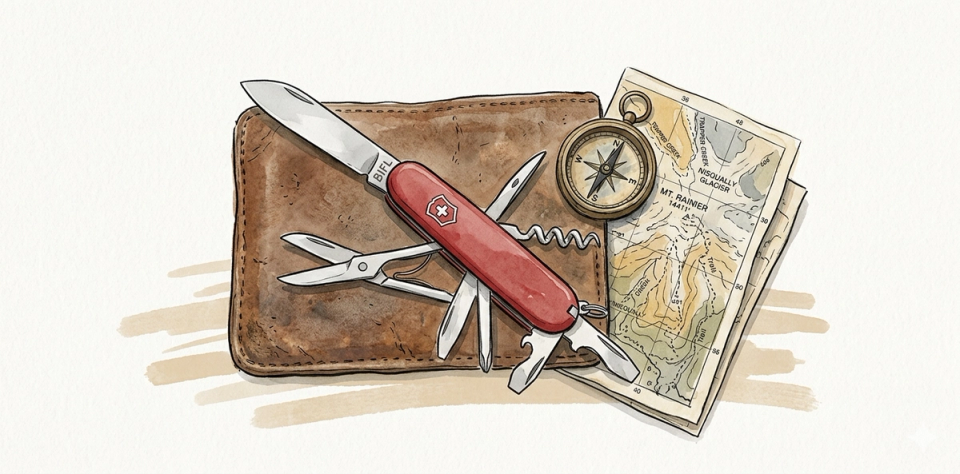
Victorinox makes pocket knives in dozens of configurations. Most people need one of three models.
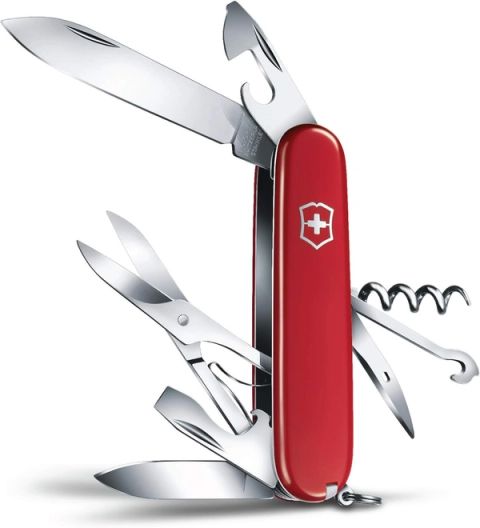
The Climber (24 functions, 91mm) is the starting point for anyone who wants more than a blade and scissors. Compact, light, practical every day.
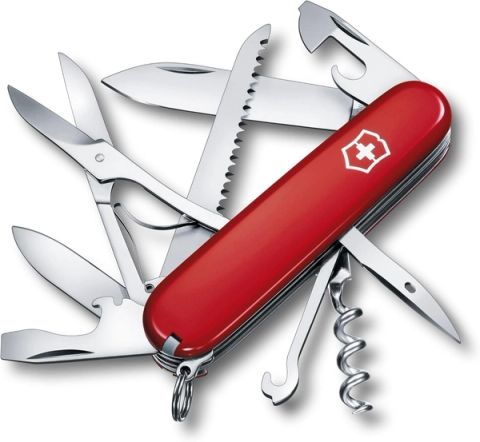
The Farmer (9 functions, 91mm) is the outdoor choice. Saw, awl, bottle opener, scissors, and blade. Nothing you do not need, everything you do.
The SwissChamp is the maximum variant. 33 functions, 95 grams. Spectacularly impractical for daily carry, but beloved by the people who simply love owning it.
Victorinox in the kitchen
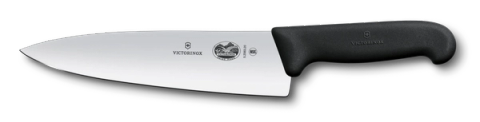
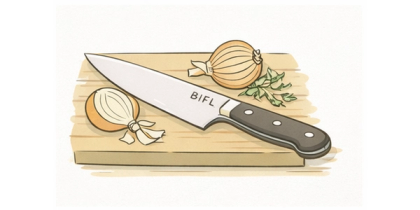
The Fibrox Pro line is Victorinox's chef's knife range. The most recommended entry-level knife among serious home cooks worldwide is the Fibrox Pro 8-inch (20cm), available for around $40. It comes sharp out of the box, the handle is ergonomic and non-slip, and the steel is identical to what you find in Swiss hotel kitchens.
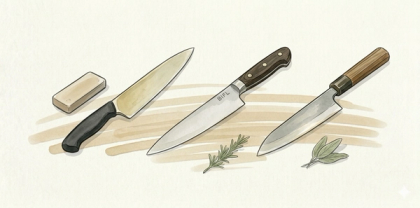
For those who want more, the Grand Maitre line offers forged knives with a wooden handle and better balance. Not necessary, but if you want it, they are worth the money.
Alternatives
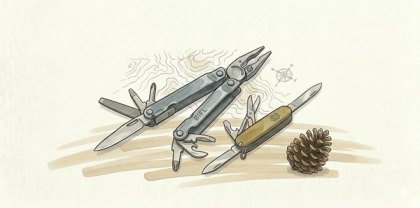
Leatherman makes multi-tool pocket knives with more focus on actual tools. If you need pliers more than a corkscrew, a Leatherman Wave+ is the better pick.
For chef's knives: the Wusthof Classic (around $130) has higher-end finish, and Japanese brands like MAC or Global offer harder steel, but require more knowledge to maintain properly.