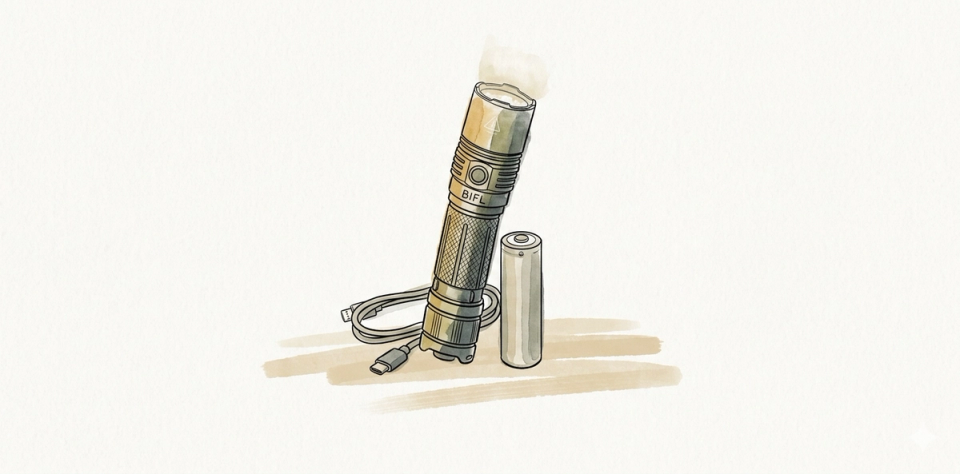
Fenix PD36R Pro - My Experience
I've gone through my share of flashlights over the years. Cheap ones that let in water after twelve months, slightly better ones that stopped holding a charge. At some point you start doing the math differently: what does it cost me if I replace this five times?
The Fenix PD36R Pro was my answer to that question.
Build and feel
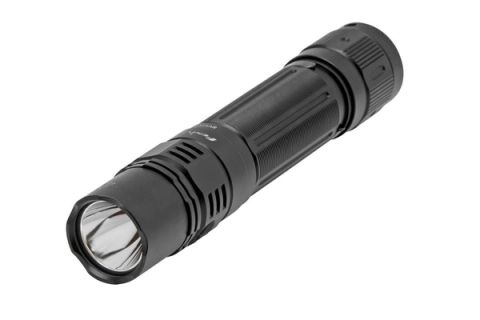
The body is machined from A6061-T6 aircraft-grade aluminum with mil-spec type III hard anodizing - the same material used in serious tactical equipment. You can feel it. It's solid without being unnecessarily heavy: 118 grams with the battery, roughly comparable to a small wallet and keys combined. It almost disappears in your pocket. Almost - because that IP68 rating (2 meters, 30 minutes) does add a certain reassuring density to it.
The controls are intuitive. Side switch cycles modes, tail switch turns it on and off. After a week you do it without looking.
Light output
2800 lumens in turbo mode is genuinely a lot for this form factor. The Luminus SFT70 LED throws a beam up to 380 meters - not for tactical operations, but enough to illuminate the far corner of a dark warehouse or campsite. For day-to-day EDC I spend 90% of my time on mid mode (~700 lumens), which is more than enough for most situations and extends runtime considerably.
The five modes are well-spaced from low (~30 lumens for nighttime use) to turbo. SOS and strobe are accessible but require a specific button sequence so you won't trigger them accidentally.
Battery and charging
USB-C directly on the flashlight - this sounds like a small thing but it matters. No separate charger, no proprietary cable. I charge it with the same cable as my phone. The included Fenix 21700 cell has enough capacity for several days of normal use. And when it eventually wears out: the battery is user-replaceable. That's a deliberate design choice from Fenix, and one I appreciate.
The BIFL question
The LED itself is not replaceable. Fenix rates it at 50,000 hours - at one hour of use per day that's nearly 137 years. In practice LEDs degrade before that, but 10 to 15 years of normal EDC use is realistic. The five-year product warranty (plus two years on the battery through Fenix Direct) covers the critical early period well.
My honest take: this is mostly BIFL. The only caveat is that if the LED fails outside of normal wear after the warranty period, you'd need to replace the unit. That risk is small, but real.
vs. the budget alternative
The Sofirn SP36 BLF (~€40) is technically impressive for the price. But the finish, charging system, and warranty support are a step down. If you want a second flashlight or a car backup: fine choice. For your primary EDC that you want to trust for years, I'll pay the difference.