The knife Swiss professional kitchens trust
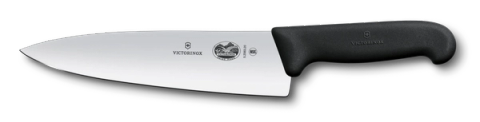
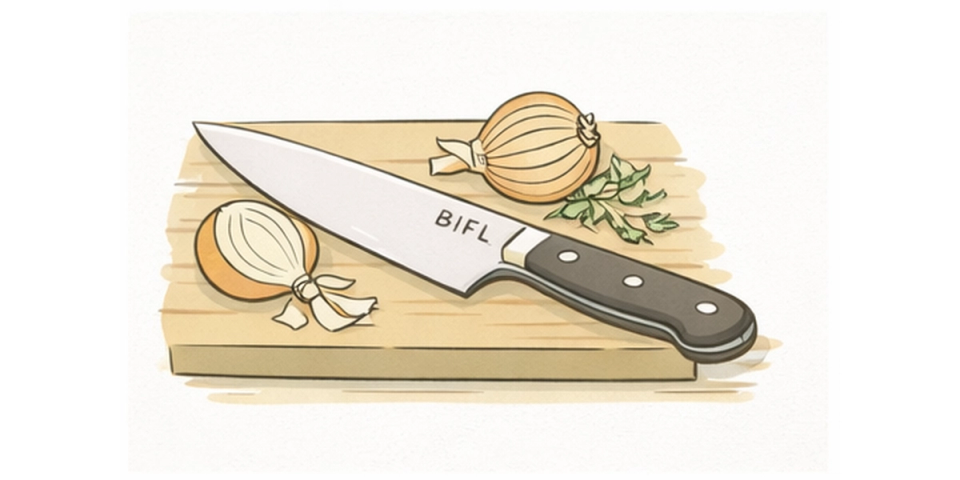
Walk into a hotel kitchen in Switzerland, or a culinary school, and you will often find Victorinox knives. Not because they are cheap - though they are reasonably priced - but because they work well, hold an edge, and survive the kind of daily punishment that premium knives sometimes do not. The Fibrox Pro 20cm has been in continuous production for decades, and the design has barely changed.
Why expensive knives are not always better
A Japanese gyuto at €200 can be an exceptional knife. But it requires more care: it is harder steel, which means sharper but also more brittle, and it often needs a whetstone rather than a honing rod. The Victorinox is softer steel - easier to hone back to sharp, forgiving of the occasional contact with a ceramic bowl rim, and you can throw it in a knife roll without anxiety. The rubber Fibrox handle is not glamorous, but it is genuinely comfortable and non-slip even with wet hands.
What actually keeps a knife sharp
The knife itself matters less than the habits around it. Use a honing rod before each session to realign the edge (honing is not sharpening - it straightens the edge rather than removing metal). Keep it off hard surfaces - a magnetic strip or a knife block, not a drawer where it rattles against other cutlery. Have it sharpened properly once a year or every 18 months. A Victorinox maintained this way will outcut a neglected expensive knife every time.
When to consider spending more
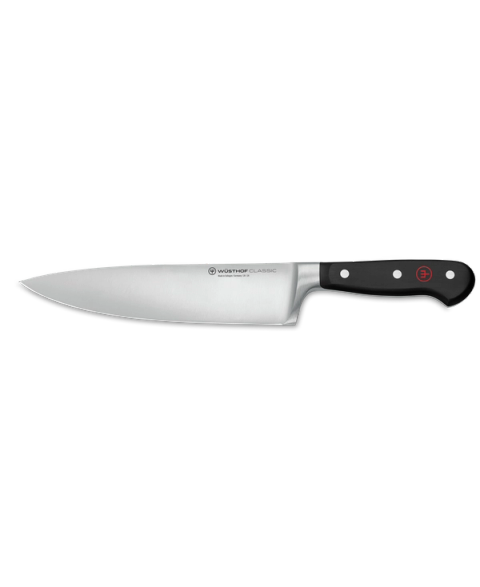
The Wüsthof Classic is the obvious upgrade - German steel, full tang, heavy bolster, a knife that feels serious in the hand. It costs around €130 and will last a lifetime with normal care. But if you are buying your first good chef's knife, or want a reliable workhorse you do not have to worry about, the Victorinox Fibrox Pro is the most sensible choice under €50.