What tools you actually use
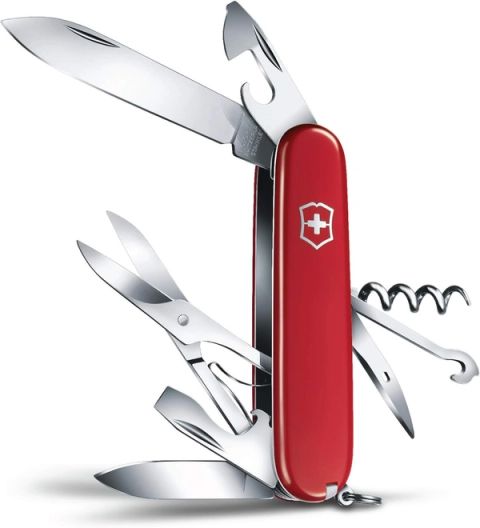
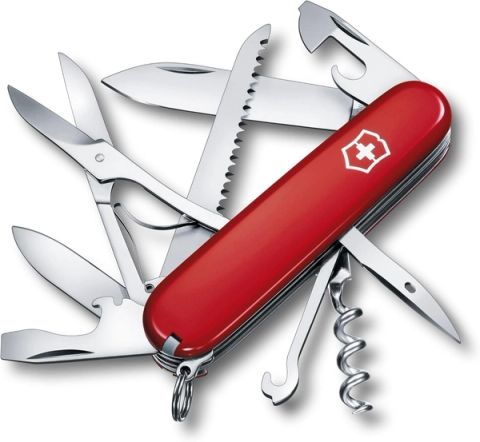
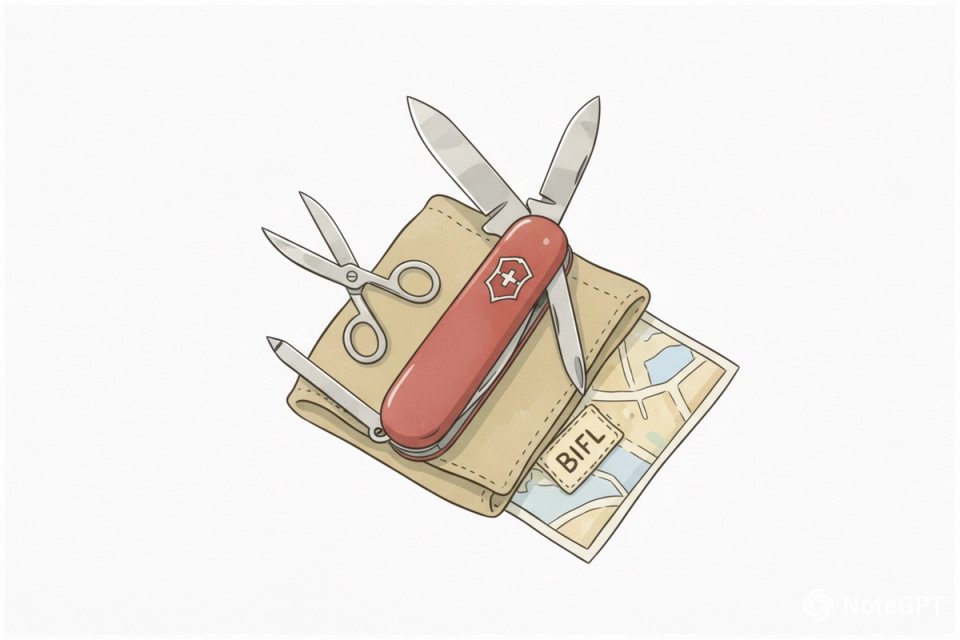
The Swiss Army knife has models with 33 tools. Most of those tools are used rarely or never. The honest list of tools people reach for regularly: the main blade, the scissors, the small and large flathead screwdrivers, the can opener, and occasionally the awl. The Climber model (12 tools) covers all of these. The Huntsman adds a wood saw, which is genuinely useful for camping and fieldwork. Beyond that, you are carrying weight for tools that will spend their life folded up.
The Climber vs Huntsman
The Climber is the versatile all-rounder: blade, scissors, can opener, bottle opener with flat screwdriver, key ring, toothpick, tweezers. It fits in a jeans pocket without bulk. The Huntsman adds a wood saw and a hook, making it the better choice for camping. Both cost under €50. If you are buying your first Swiss Army knife and are not sure which tools you will use, the Climber is the safer default.
130 years of barely changing
Victorinox has been making these knives in Ibach, Switzerland since 1891. The original contract was to supply the Swiss Army with a soldier's knife. The design has been refined - the steel is better now, the scales fit more precisely, and the locking springs are more consistent - but the fundamental form is unchanged. The same knife your grandfather carried. Victorinox covers manufacturing defects for the lifetime of the product, and the replacement parts (scissors, toothpick, tweezers) are sold separately.
Airport security: check local rules
A Swiss Army knife blade is under 6cm, which is below the limit for carry-on in some countries but not all. EU regulations prohibit any knife in cabin baggage regardless of blade length. In the US and some other countries, the TSA prohibits knives in carry-on. Check the specific rules for your route before packing. For travel, many people carry a Swiss Army knife Signature (with a pen but no blade) or a Classic SD (scissors but no blade), which pass security in most contexts.