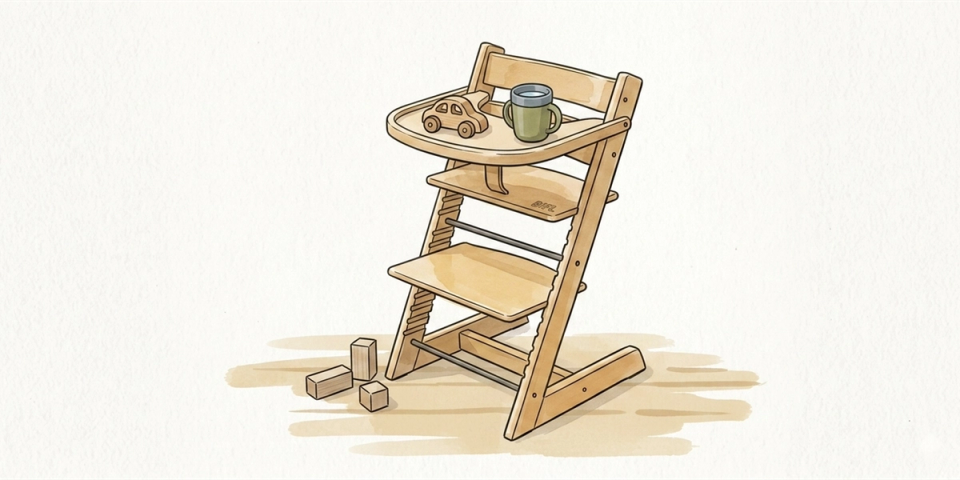
Our Experience After More Than Five Years
We have used the Stokke Tripp Trapp for more than five years now, with one white and one grey chair at the table. Our children sit on them every day, which is the best kind of test: the chairs still feel stable, do not slide around nervously under a child and give enough support for calm meals at the table. Calm by family standards, at least.
The biggest gain is in ordinary use. Food, stains and sticky hands wipe off the painted finish quickly. The seat and footrest are easy to adjust as your child grows, so you are not shopping for a different chair again after two years.
We are still happy with them. Not because the Tripp Trapp is perfect, but because after five years it does exactly what you hope an expensive high chair will do: stay stable, keep fitting and avoid becoming annoying in daily use.
What Is the Tripp Trapp?
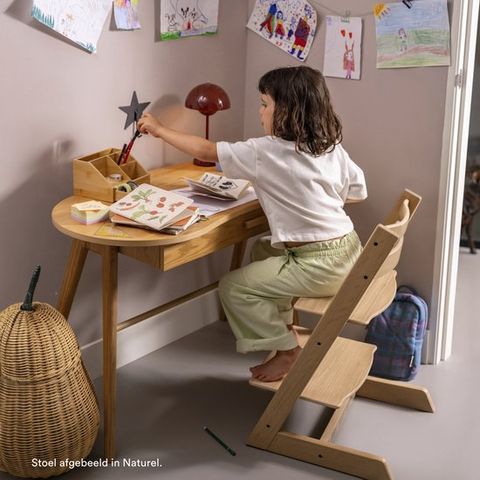
The Stokke Tripp Trapp is an adjustable wooden chair that grows with your child. The seat and footrest can be adjusted independently in height and depth. With the separately sold Newborn Set or Baby Set, you can use it early on. After that, it simply becomes a child seat at the family table.
The standard version is made from solid European beech. The chair weighs about 7 kg, measures 460 x 490 x 790 mm and is rated by Stokke for a maximum load of 136 kg. The construction is mechanical, with bolts and separate parts that can be ordered later.
Peter Opsvik designed the chair in 1972. That sounds like design history, but for this review the more relevant point is that the design has stayed almost the same for decades. Parts and accessories remain useful much longer than with most children's furniture.
Where It Works Well
Stable Seating at the Table
The Tripp Trapp feels sturdier than many lightweight plastic high chairs. Our children sit on it comfortably, even when they wiggle or climb onto it themselves. It is still a chair, not playground equipment, but the base feels broad and dependable.
The adjustable footrest matters more than you might expect. A child is not left dangling with loose legs at the table and can push against the footrest. That does not make the chair magically ergonomic, but it does make it more comfortable for long meals, crafts and homework.
Cleaning and Adjusting
In daily use, cleaning is simple: wipe it with a cloth and you are done. The grooves around the board cutouts need a bit more attention, especially after rice, crumbs or dried sauce. A damp cloth with a corner or a toothpick is usually enough.
Adjusting the chair takes a few minutes. You loosen the sides, slide the boards into a different position and tighten everything again. You will not do it every week, but during growth spurts it is useful that the chair can be made to fit without much fuss.
Construction and Parts
Solid beech is not just a marketing detail here. It explains why the chair feels hard, does not flex easily and handles daily load well. The load-bearing structure is not made from particleboard or thin plastic, and you notice that after years of use.
Separate glides, bolts and other small parts are widely available. For a chair that is often bought secondhand, that matters. A missing screw or worn glide does not have to mean the end of the chair.
Wear After Five Years
The painted finish on our white and grey Tripp Trapps is thick and hard. Most everyday bumps leave no obvious damage. You do see small scratches and changes in sheen, but that is normal for a chair used by children every day.

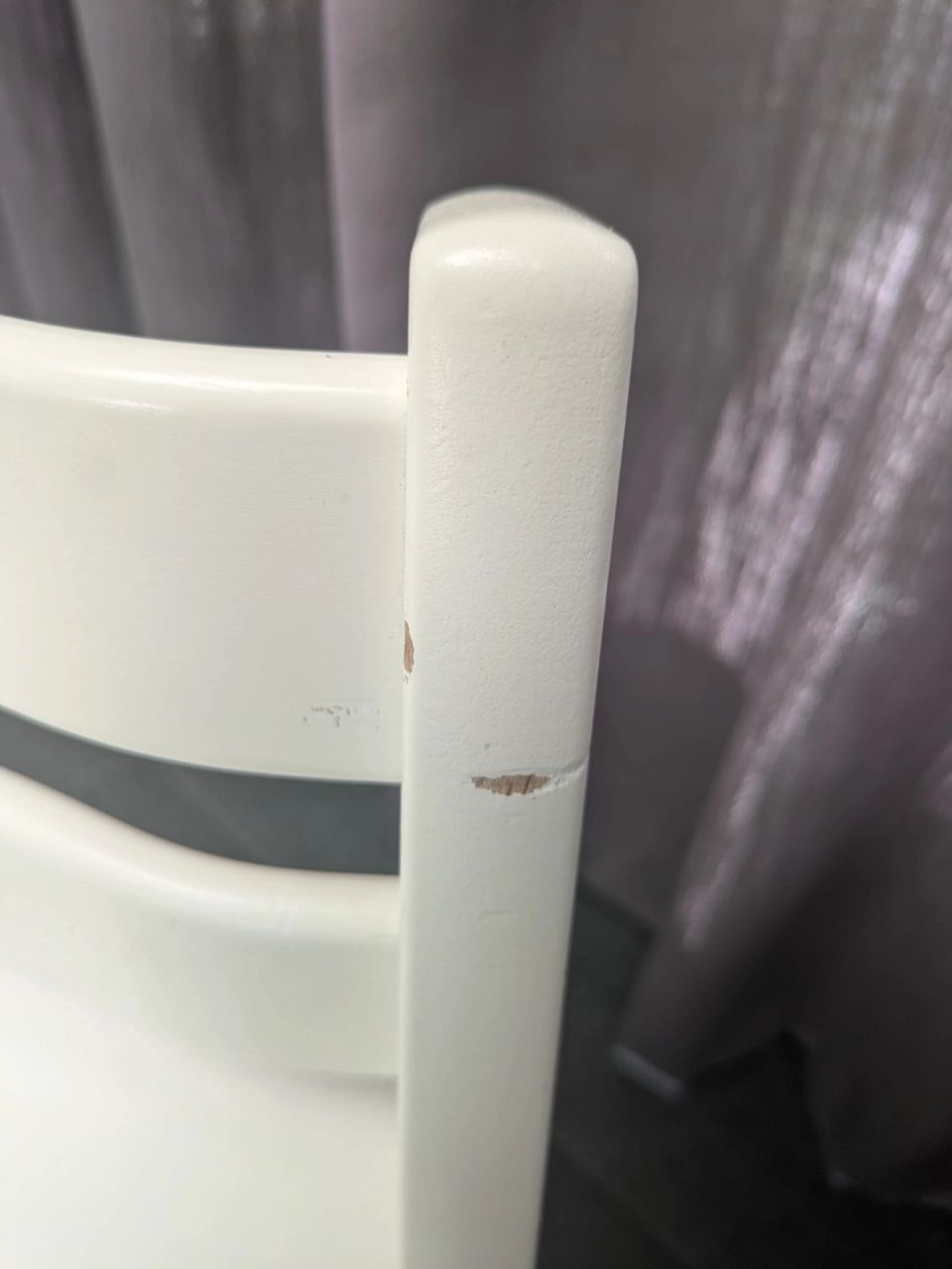
The clear damage on ours is in two places. The first is where the chair often hits the table. On our white chair, paint has come off the upright. It is cosmetic, but if you want a painted chair to stay neat, this is the exact spot to watch.
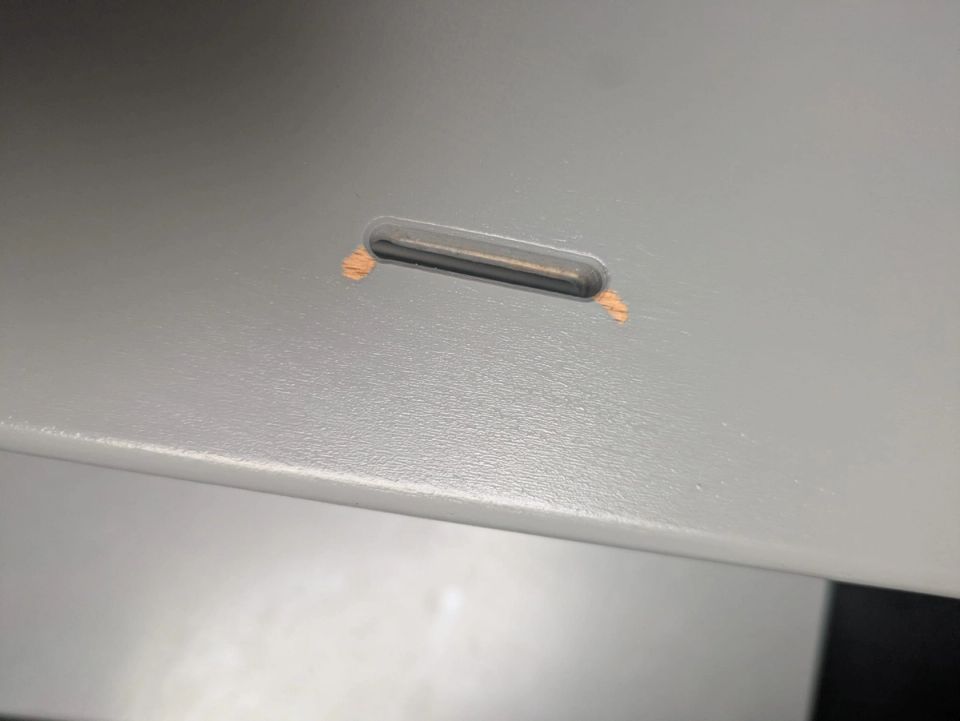
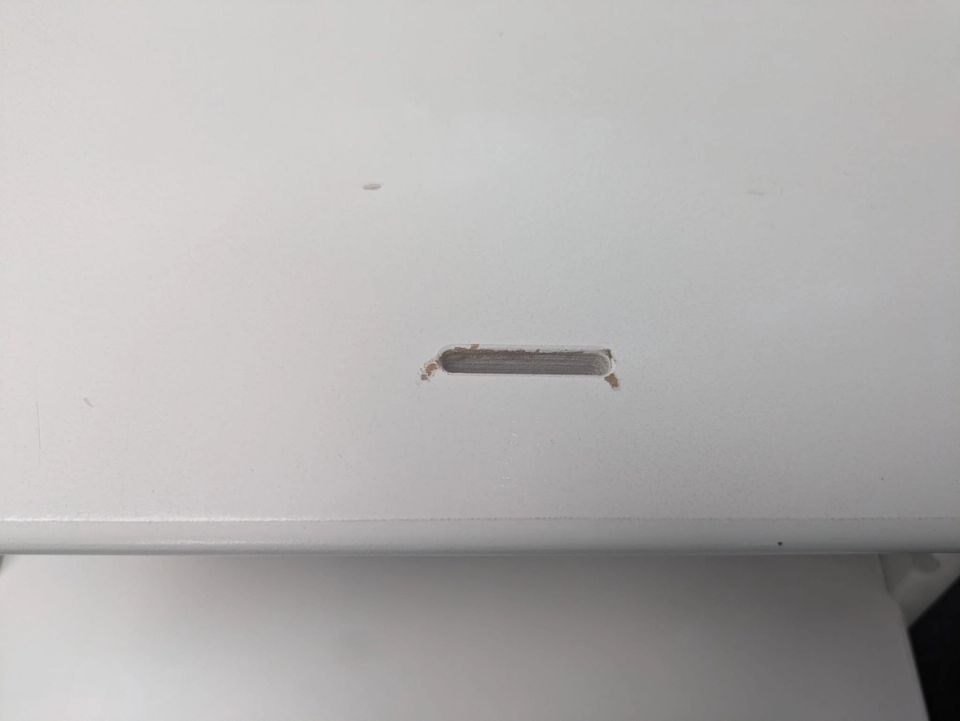
The second spot is the seat board around the cutout where the Baby Set used to sit. The Baby Set caused paint damage on both the white and grey chair. With washable cushions you do not see it, but those cushions are not necessary for using the chair.
Accessories: Useful, But Expensive
The chair itself is already expensive, but the real bill grows through accessories. The Baby Set and tray are quite pricey. In our case, they were easy to sell when we no longer needed them, which made the cost feel less painful afterward.
For the chair itself, resale is more nuanced. There is a lot of supply online, so a tidy Tripp Trapp will probably sell, but you are competing with many other sellers. Price, color and condition matter a lot.
The cushions are expensive too. They are washable and hide damage on the seat board, but you do not need them for the chair to work well. Cheaper third-party versions can look appealing, but fabric, fit or finishing can disappoint.
Buying Secondhand
Secondhand is often the more interesting route for the Tripp Trapp. Check the production date carefully if you want to use a Baby Set. Models from before 2003 are not automatically compatible with the current Baby Set 2.
Check these points before buying:
Paint damage on the uprights, especially where the chair meets the table.
Wear around the cutouts of the seat board and footrest.
Whether the bolts tighten properly and are not stripped.
Whether the glides underneath are still present.
Which accessories are included, because those are what make buying new expensive.
A few signs of use are not a problem. Bare spots in the paint are mostly cosmetic, as long as the wood has stayed dry and the construction still feels tight.
Pros
Still stable and comfortable at the table after more than five years of daily use.
Easy to clean with a cloth.
Seat and footrest are easy to adjust as children grow.
Solid beech and mechanical joints inspire confidence for long-term use.
The Baby Set and tray were easy for us to resell.
Separate parts are readily available.
Cons
High purchase price, especially with Baby Set, tray, harness and cushions.
Painted versions can get visible paint damage where they hit the table and where accessories clamp onto the chair.
Cushions are expensive but not necessary. Cheaper third-party versions vary in quality.
The secondhand market has a lot of supply, so reselling the chair itself requires realistic pricing.
Grooves around the boards collect crumbs and sometimes need extra cleaning.
Pre-2003 models do not simply fit the current Baby Set 2.
Is the IKEA Antilop Good Enough?
The IKEA Antilop is still a smart cheap high chair for the first years. It is light, inexpensive and quick to clean. If you mainly need a temporary baby or toddler chair, it is not a bad choice. We had one too and took it on holidays until the children were about three.
The Tripp Trapp wins on lifespan and everyday comfort at the table. It grows for longer, looks less temporary and stays useful when a child has outgrown the real high-chair phase. Bought secondhand, the difference in total cost becomes much smaller.
Conclusion
We would buy the Tripp Trapp again. After more than five years of use, it is still stable, easy to clean and quick enough to adjust. Our children like sitting on it, and the chairs stay at the table instead of getting in the way.
Price remains the biggest objection. The accessories in particular feel expensive for what you get. The paint is strong, but not invulnerable: table bumps and the Baby Set can leave visible marks. For us, that does not change the conclusion. The chair itself will probably last for years, which is exactly why it belongs on True Keepers.