Is this a barbecue for life?
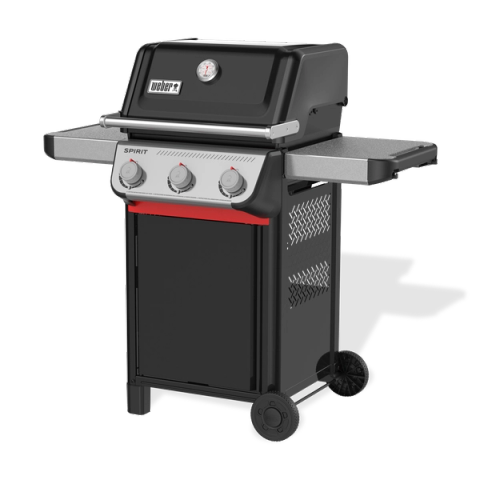
A good gas grill is not a yearly purchase. The question I ask with every buy in this segment: will this still work when my kids are grown? For the Weber Spirit E-310, the answer leans positive. Not unconditionally, but positive.
What you get
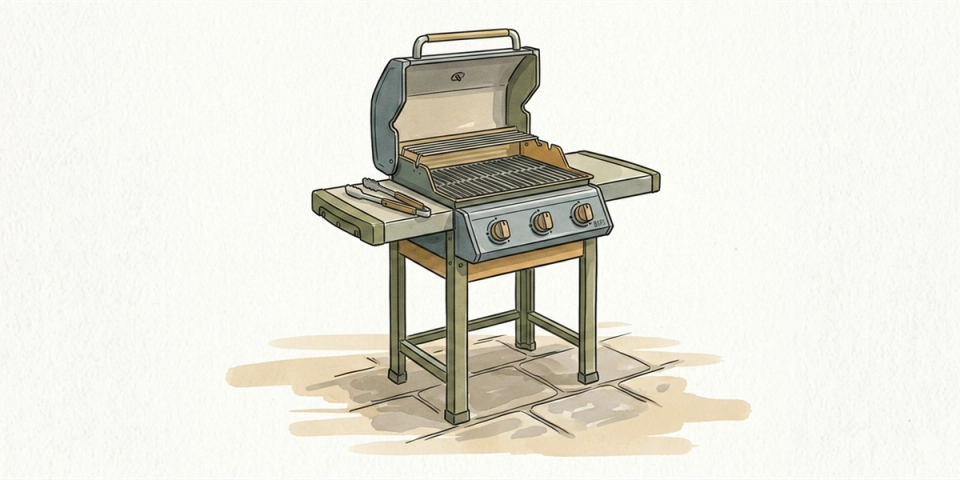
The Spirit E-310 is a three-burner gas grill with 32,000 BTU total output and a primary cooking area of 424 square inches. Three stainless steel burners are controlled independently, allowing genuine zone grilling. The Infinity Ignition system is battery-powered and operates per burner.
The firebox is cast aluminium. That sounds unremarkable, but it matters: cast aluminium does not rust, and in budget grills it is typically a thin steel firebox that fails first. Weber backs the cookbox and burners with a 10-year warranty. The porcelain-enameled cast iron grates carry a 5-year warranty.
Dimensions (lid closed): 44.5 in H, 52 in W, 27 in D. A warming rack adds 105 square inches for indirect holding.
Price: approximately $499 in the US, €479–549 in the Netherlands.
Durability: what fails first?
The Spirit E-310 is not a "buy and forget" grill. It is a "buy and maintain" grill. That distinction matters.
What lasts: The cast aluminium firebox survives decades if stored dry and cleaned periodically. Owners of Spirit models from the 1990s report on forums that the core of their grill still functions. The stainless steel burners hold up well past 10 years under normal use. Replacement costs roughly $25–40 per burner and is a DIY job.
What needs earlier attention: The porcelain-enameled flavorizer bars rust faster on the Spirit than you would expect, especially compared to the Genesis line which uses stainless steel bars. Plan on replacement after 18–36 months of heavy use. A set costs $30–60. The igniter is the weak link of almost every gas grill. After 18–30 months it typically starts requiring multiple clicks. Replacement is straightforward at $25–65. The cast iron grates hold up 3–5 years if you season them regularly and store the grill covered; chipped enamel accelerates rust.
The key to long-term use: annual inspection of flavorizer bars, burners, hose, and regulator; monthly cleaning of the firebox; replacing worn parts at the first sign of deterioration. Weber parts are widely available through Weber directly, Amazon, and third-party suppliers in the US, the Netherlands, and beyond. That availability is what sets this brand apart from budget alternatives, where discontinued parts become a problem after five years.
Versus the Weber Genesis E-310: for roughly $280 more you get stainless steel flavorizer bars (significantly more durable), a heavier welded frame, and 26% more cooking area. For heavy users or anyone wanting to reduce long-term maintenance costs, the Genesis is the more logical investment.
Versus the Napoleon Prestige 500: a completely different category. Lifetime warranty on major components, made in Canada, dual infrared burners. Costs three to four times as much. For those who want to maximize longevity above all else, Napoleon is the gold standard. The Spirit delivers roughly 80% of the performance at 25% of the Napoleon price.
Cost-of-ownership snapshot: A Char-Broil Performance at $249 averages 5–6 years of use. Three units over 20 years, including maintenance, runs to roughly $700–900. One Spirit E-310 at $499 with periodic parts replacements comes to $600–700 over the same period. Buying cheap is not always living cheap.
Community perspective
On Reddit, the verdict on the Spirit line is consistently positive when it comes to longevity. Users point to parts availability as the main reason to choose Weber over the alternatives. The recurring summary: if the core is still good, you can replace everything else and keep going for another decade.
One user on r/webergrills who bought the 2025 model wrote: "I've cooked on the Summit and Genesis series and honestly, for the money, the Spirit series cooks just as well if not the same. At $450 I am pleased with the build quality." That is a fair assessment: the Spirit is not the top of the Weber line, but it performs well for its price.
A recurring note across threads: the current Spirit generation feels lighter than older models. The lid is thinner, some plastic components feel cheaper. This is a real observation, not a deal-breaker, but "built like the old days" no longer applies without qualification.
Pros
Cast aluminium firebox: rust-resistant and fully repairable
Stainless steel burners with 10-year warranty
Wide network of replacement parts in the US, Europe, and internationally
Three independent burners for zone grilling
AmazingRibs.com Platinum Medal: 15–25 years with proper maintenance
Lower total cost of ownership than budget alternatives over 20 years
Cons
Porcelain-enameled flavorizer bars instead of stainless steel (Genesis has RVS): faster wear
Lighter construction than older Spirit generations
Lid feels less robust than some competitors at this price point
No side burner or infrared option
Annual maintenance is genuinely required, not optional advice
Verdict
The Weber Spirit E-310 is the strongest entry-level choice in its segment for anyone who does not want a grill heading to landfill after five years. The cast aluminium firebox and broad parts availability are the two pillars of its longevity. It is not a "buy and forget" product: you will need to replace flavorizer bars and grates, check the igniter periodically, and store or cover the grill properly. Do that, and 15–20 years is realistic.
For those who want to invest more and think less about maintenance, the Weber Genesis E-310 is the logical next step. For the absolute maximum in longevity, Napoleon Prestige is the call. But when budget and long-term value need to be in balance, the Spirit E-310 earns its place on the shortlist.