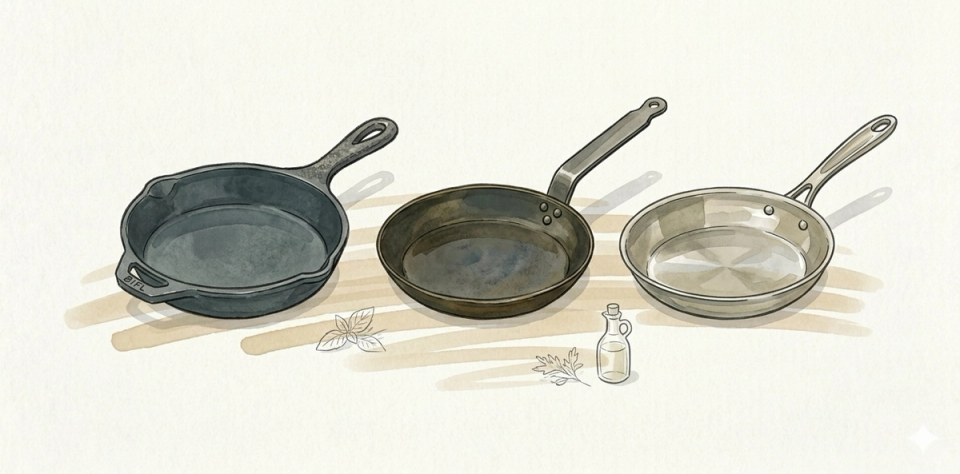
Three materials dominate the BIFL frying pan conversation: cast iron, carbon steel, and stainless steel. All three will outlast you. The question is which suits how you cook.
Cast Iron
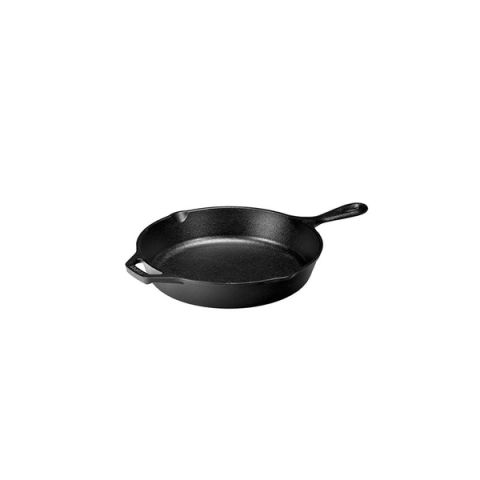
Cast iron retains heat exceptionally well, which makes it ideal for searing and baking. The Lodge Cast Iron Skillet (around €35) is the standard recommendation: pre-seasoned, made in Tennessee since 1896, with a lifetime warranty. The downside is weight (nearly 2 kg) and slow heat response. It takes 5 to 7 minutes to heat evenly and adjusts slowly when you change the flame.
Carbon Steel
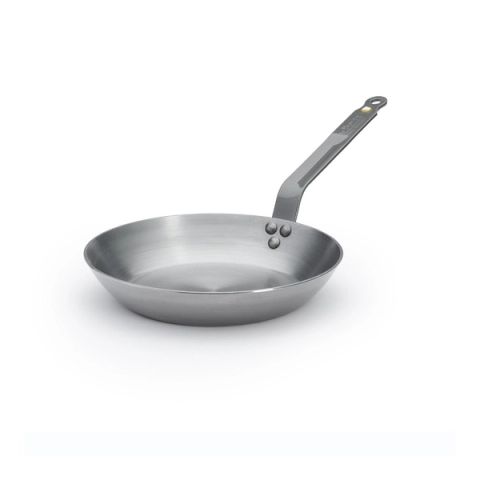
Carbon steel is roughly half the weight of cast iron, heats faster, and responds to temperature changes the way a professional kitchen needs. The De Buyer Mineral B is the benchmark: made in France for over 180 years, no coating that degrades. It seasons the same way as cast iron. The tradeoff is a seasoning period of a few weeks and the same avoidance of acid and soap. For most home cooks, it is the best choice.
Stainless Steel
Stainless steel requires no seasoning, handles acidic foods without issue, and goes in the dishwasher. The All-Clad D3 and Demeyere Atlantis are the BIFL standards. Food sticks more than on a seasoned surface, but with proper technique (preheat fully, add oil, let the pan release naturally) it becomes manageable. Stainless is the most versatile option for varied cooking styles.
The Recommendation
For most home cooks: the De Buyer Mineral B 26 cm. Lighter than cast iron, better heat response, improves with every use, and built to last multiple generations. If budget is the constraint and you mostly sear or bake in the oven: the Lodge. If you cook acidic dishes regularly and want zero maintenance: the All-Clad D3. What to avoid: non-stick pans. Teflon coatings degrade within 3 to 5 years regardless of care. A well-seasoned carbon steel or cast iron pan achieves the same easy release and never needs replacing.