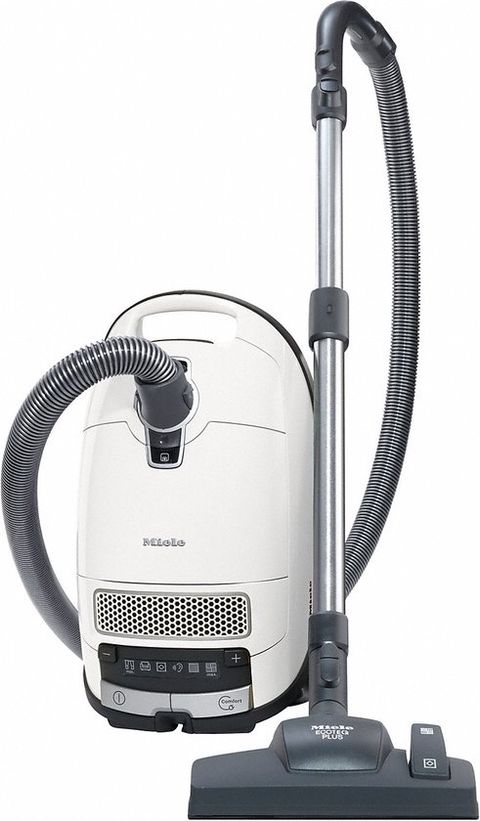
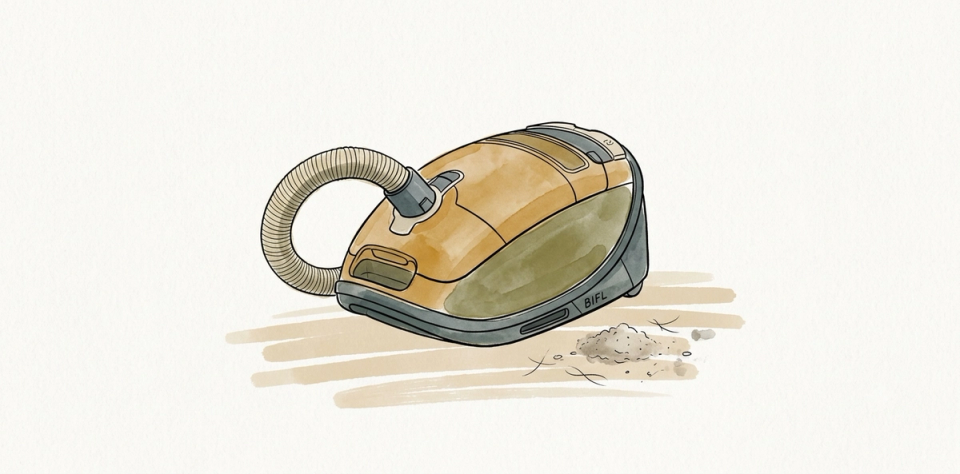
Miele Complete C3: My Experience
For years I bought cheap vacuums. Around €80, sometimes a bit more, and every three to five years I'd drag a new one home. At some point I sat down and did the math. Over twenty years that's four machines, roughly €320, and a lot of frustration with hoses that crack, suction that fades, and bags that are suddenly discontinued. I switched to the Miele Complete C3 and haven't looked back.
Build and feel
The first thing you notice is how the hose connects. It clicks into place with a solidity that's hard to describe until you've handled a lot of cheaper machines; there's no wobble, no rattle, no give. The plastic housing feels dense rather than brittle. It's made in Germany and you can tell: tolerances are tight, seams are flush, nothing flexes when you pick it up.
The AirClean filter system is a sealed design. When you change the bag, no dust cloud puffs out into the room. The bag collar closes on itself as you pull it free. For anyone with allergies this matters more than the headline filtration numbers.
Miele tests their machines for 20 years of normal household use. That's not a marketing claim; it's an engineering protocol. The 5-year warranty backs it up. A company that doubts its own product doesn't offer five years on a vacuum cleaner.
Performance
Suction is adjustable via a rotary dial on the unit itself, not just on the handle. I run it on medium for most rooms and only crank it up for the bedroom carpet. At full power it stays at 69 dB; that's quiet enough to hold a conversation across the room. I've vacuumed while my partner was on a call in the same space and it wasn't a problem.
The combination brush switches automatically between hard floors and carpet. On tiles it glides without scattering debris; on rugs it digs in without getting stuck. I've used combination brushes that require manual switching and always forget; the auto version removes that friction entirely.
Repairability
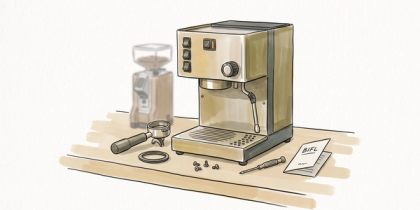
This is where the Miele genuinely separates itself. The hose, tube, brush head, and motor brushes are all user-replaceable. An iFixit guide exists for the C3 series. Spare parts are stocked by multiple third-party suppliers and Miele itself keeps parts in production for years after a model leaves the lineup.
GN bags are available everywhere: supermarkets, hardware stores, online. You're not dependent on a single supplier or a proprietary format that gets discontinued. If the hose cracks in year twelve, you replace the hose, not the machine.
The BIFL question
Buy it for life? Yes. The C3 is one of the few consumer appliances where the manufacturer has designed for longevity rather than planned obsolescence. The 20-year test protocol, the 5-year warranty, the parts availability; these aren't accidents. Miele's business model depends on a reputation for durability. That aligns their incentives with yours.
The one caveat: buy from an authorised retailer to ensure your warranty is registered correctly. Grey-market units sometimes come without the full 5-year coverage.
Comparison with cheaper alternative
The Philips PowerPro Compact costs around €80. It's a decent vacuum. Realistically it lasts 3 to 5 years before suction drops, a part fails that's no longer available, or the motor gives out. Over 20 years you'd buy four of them: €320 total.
The Miele Complete C3 EcoLine starts at around €350. Over the same 20 years you're paying €30 more, and you have a significantly better vacuum the entire time. Quieter, more powerful, sealed filtration, repairable. The cheap option isn't actually cheaper.
If €350 upfront is a genuine barrier, the Philips is fine. If you can absorb the upfront cost, the choice isn't hard.