Short verdict
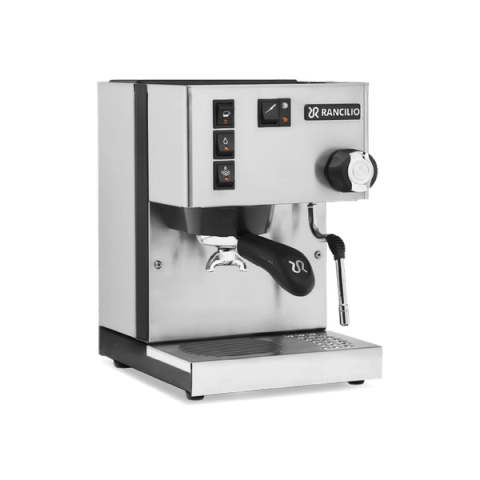
The Rancilio Silvia is not a machine to buy because it is modern or effortless. You buy it because it is mechanically simple, solid, and maintainable. My experience-based verdict: it is a strong TrueKeepers candidate for someone who wants to learn espresso and accepts maintenance, but it is not the right choice if convenience comes first.
Scope matters: this review covers the classic Rancilio Silvia, often sold in Europe as Silvia E or Silvia E V6. It does not cover the Silvia Pro X, which is a different, more expensive dual-boiler machine with PID and extra features.
Why it can last
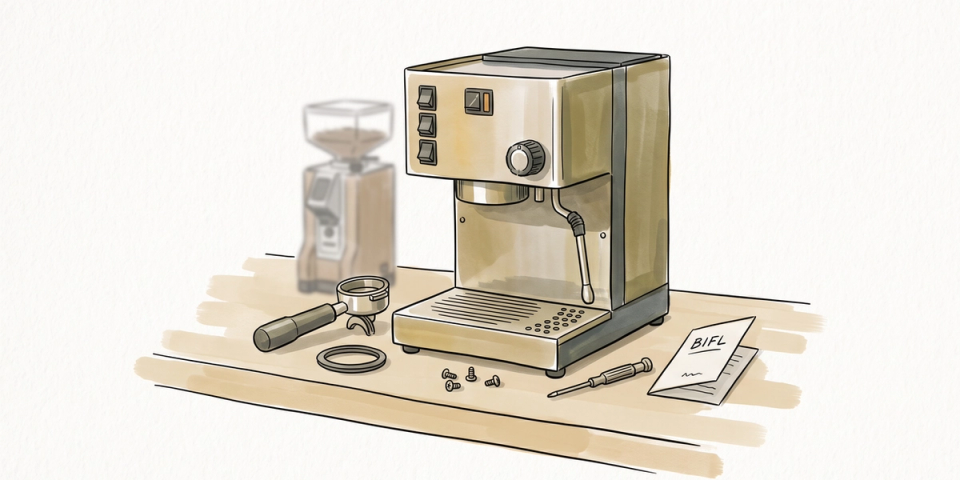
The Silvia feels closer to small commercial equipment than to a lightweight kitchen appliance. It has a stainless steel body, simple switches, a brass boiler, and a 58 mm chrome-plated brass portafilter. That 58 mm standard matters: tampers, baskets, shower screens, and bottomless portafilters are easy to find.
The best buy-it-for-life argument is not that nothing will ever fail. It is that normal wear is usually repairable. Group gaskets, shower screens, steam valve parts, pumps, thermostats, switches, and OPV parts are available from specialist retailers. Exploded diagrams, guides, and user knowledge are easy to find. That makes repair more rational than replacement unless the frame, boiler, or corrosion damage is severe.
The workflow: single boiler means waiting
The Silvia is a single-boiler machine. The same boiler handles brewing and steaming. For espresso, that is fine. For cappuccino or latte, you notice the compromise: pull the shot, wait for steam temperature, steam milk, then cool the machine back to brew temperature. For one or two milk drinks it is manageable. For several cappuccinos in a row, it becomes tedious.
Warm-up also needs realistic expectations. The boiler heats fairly quickly, but the heavy group and portafilter need more time. For consistent shots, I would plan around 20 to 30 minutes rather than expecting perfect espresso immediately after switching it on.
Temperature surfing or PID
The stock classic Silvia uses thermostats, not PID. Brew temperature swings are the main weakness. You can work around this with temperature surfing: timing, flushes, and routine to catch the machine near the right brew temperature. That is part of the Silvia’s character, but it makes the machine less forgiving.
A PID mod makes the Silvia much more consistent and is popular among owners. It also adds cost and, if self-installed, may create warranty concerns. My plain view: without PID, the Silvia is durable and educational; with PID, it becomes much more attractive for repeatable espresso.
The grinder matters
Do not buy this machine without a capable espresso grinder. The Silvia is precise and sometimes unforgiving: poor grind quality, inconsistent distribution, or a grinder that cannot go fine enough will show up immediately in the cup. A good grinder, 58 mm tamper, scale, blind basket, cleaning powder, and sensible water plan should be part of the real budget.
Community signal
In Reddit discussions, the Silvia appears repeatedly as a durable, tinker-friendly choice. One user calls it ‘pretty unkillable if you maintain it properly’; another mentions a PID-modded Silvia alongside the Gaggia Classic Pro as a solid used beginner setup. These are not hard lifespan data, but they match the broader picture: many parts, lots of knowledge, and many machines kept running for years.
Maintenance and lifespan
With good water management, regular cleaning, and normal replacement parts, a 10 to 20 year service life or longer is credible. Purge the steam wand after milk use, keep the group and portafilter clean, backflush regularly with water and periodically with detergent, replace the group gasket and shower screen when needed, and prevent scale buildup.
The Silvia asks for attention, but that attention pays back. It is not a sealed throwaway appliance. It is a platform you can understand and maintain.
Compared with a cheaper alternative
A De’Longhi Dedica is cheaper, smaller, and easier for beginners. For casual espresso, that can be perfectly reasonable. But as a TrueKeepers pick, it is weaker: lighter construction, more appliance-like design, smaller 51 mm accessories, and a less attractive repair economy. The Silvia is more expensive and harder to use, but much stronger as a long-term machine.
Who should buy the Rancilio Silvia?
Choose the Silvia if you mostly drink espresso or americano, make one or two milk drinks at a time, own or plan to buy a good grinder, and prefer repair over replacement. Skip it if you want automatic milk, a built-in grinder, fast warm-up, volumetric dosing, or instant consistency without a learning curve.