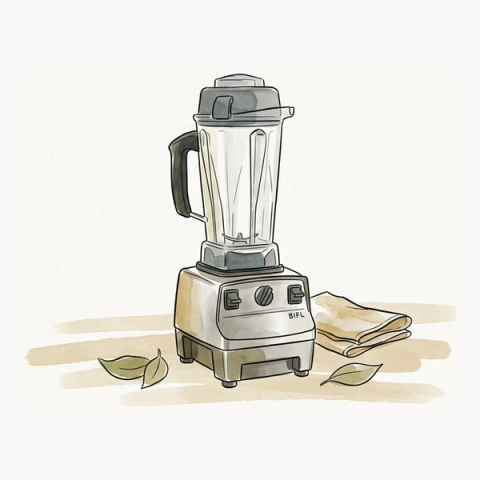
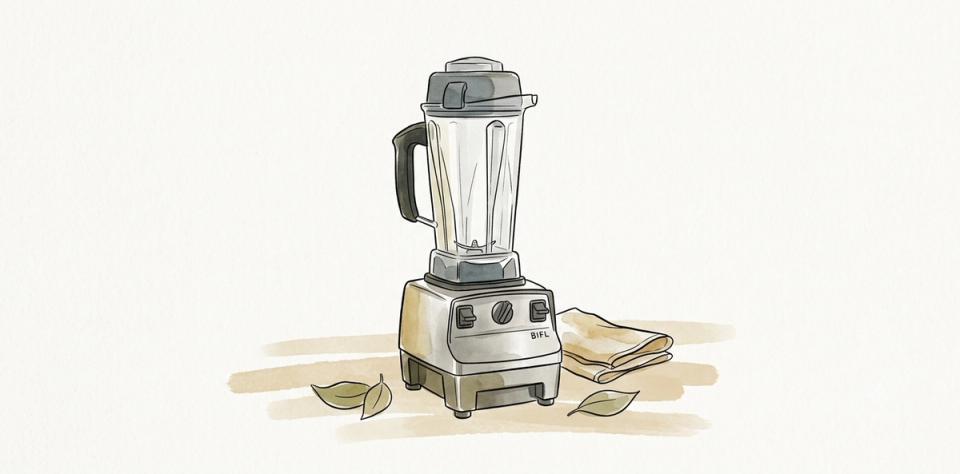
The Vitamix 5200 has been a fixture in kitchens around the world for over three decades. Not because it is cheap - it is not - but because it works, and keeps working. People report machines from the 1990s still grinding smoothies every morning. That tells you everything.
Motor and performance
The 5200 motor peaks at 2 HP (1,380 W) and spins blades at up to 37,000 RPM. That is enough to process frozen fruit, whole nuts, and raw grains without stalling. The blade friction generates enough heat to bring cold ingredients to steaming hot soup in about six minutes - no heating element required.
Blades are made from aircraft-grade stainless steel. They are not sharpened but rather hammered, which keeps the cutting edge effective for longer. The drive socket at the base of the container is the most wear-prone part - but Vitamix sells it separately, and many long-term owners replace it themselves without professional help.
Warranty and service
The Vitamix 5200 comes with a 7-year full warranty covering parts, labor, and two-way shipping. If Vitamix cannot repair or replace the unit, they issue a full refund. The current Ascent X2 adds three blending programs and a self-cleaning program, but it costs more and uses a more complex control system.
Vitamix services machines up to 20 years old, and spare blades, lids, and tampers are still sold directly through Vitamix and parts suppliers like PartsFe. The most common failure point is the drive socket, which iFixit has a full teardown guide for.
Noise and daily use
Noise is the clearest trade-off. At full speed, the 5200 dominates a normal conversation, so early-morning use in a small home is hard to ignore. The tall 64-ounce container also needs more clearance than current low-profile designs. In return, the controls stay simple: one speed dial, one high-speed switch and no display or wireless connection.
5200 vs current Vitamix models
Vitamix still sells the 5200 as part of its Legacy Series. It accepts the classic 64-ounce container and other legacy-compatible containers, but not the Self-Detect containers or food-processor attachment used by newer Ascent systems. Choose the 5200 for manual control and a long-established parts ecosystem. Choose an Ascent X model if presets, newer attachments and a shorter low-profile container matter more.