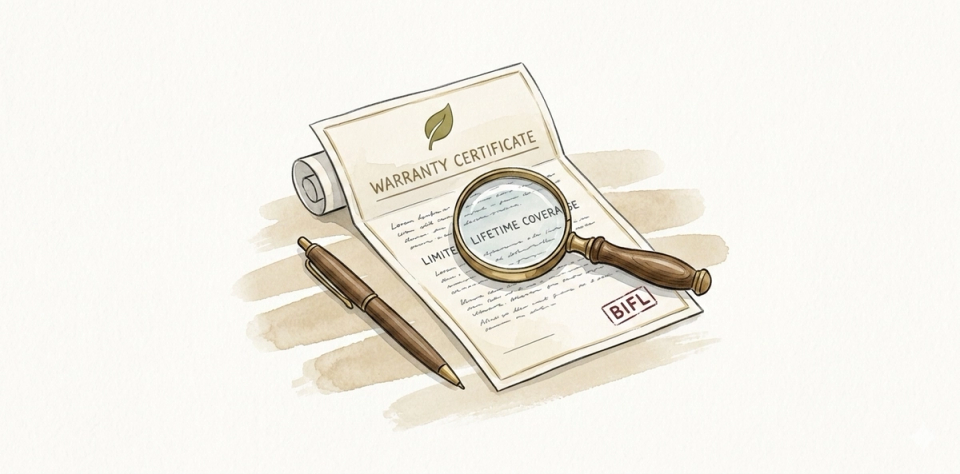
Every brand in the premium cookware, knife, and outdoor gear space uses the words lifetime guarantee or lifetime warranty. Almost none of them mean the same thing.
Here is what is actually happening.
The three types of lifetime
When a brand says lifetime, they typically mean one of three things:
- The lifetime of the product. Which they define. Which is often shorter than you would expect.
- The lifetime of the original purchaser. Better, but usually non-transferable and requires proof of purchase.
- An unconditional guarantee against defects and damage under normal use. This is the one that actually matters.
Very few brands offer option three. The ones that do, consistently, are worth paying more for.
What the fine print usually says
The classic escape clause is normal use. Brands define normal use however they want. Le Creuset's warranty covers manufacturing defects but excludes damage from misuse, negligence, or accident. Drop a pan. Chip the enamel. That is an accident. Not covered.
Lodge's warranty is more honest: it covers defects in material and workmanship. It does not cover rust from improper care, which is reasonable. But it also means the word lifetime is doing a lot of heavy lifting.
The brands that actually stand behind it
A handful of brands have warranties that hold up under scrutiny.
Victorinox replaces knives with chipped or broken blades, no questions asked, as long as the damage is not from obvious misuse. They have been doing this for decades.
Darn Tough socks have an unconditional lifetime guarantee. You mail in the worn-out socks, they send you new ones. No questions, no proof of purchase. This has been their policy since 2004.
Benchmade will sharpen, adjust, and repair any Benchmade knife for the life of the knife. Not just manufacturing defects. The actual knife.
These are exceptions. Most lifetime guarantee products are not in this category.
What to look for instead of the word lifetime
Ask two questions before buying any premium product:
- What specifically is covered? Get the actual warranty document, not the marketing page.
- What is the process for a claim? If it requires original receipt, registration within 30 days, and a return authorization number, the brand is making it hard to use on purpose.
A brand that is genuinely confident in their product makes the warranty easy to use. That confidence is the tell.