Why non-stick is not BIFL
PTFE coating starts breaking down at 260°C. After two to three years of regular use, it sheds particles. Once scratched, it is finished. You cannot repair it. You cannot restore it. It goes in the bin.
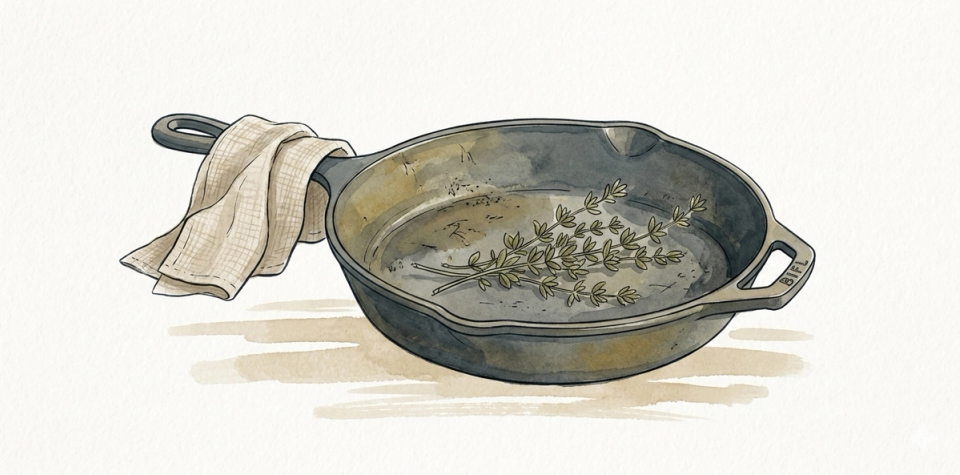
Cast iron works the other way. The surface builds up over time. Layers of polymerised oil baked into the iron. The more you cook, the better the surface gets. A pan from your grandmother is not a compromise. It is probably better than anything you can buy new.
Lodge or vintage: what actually matters
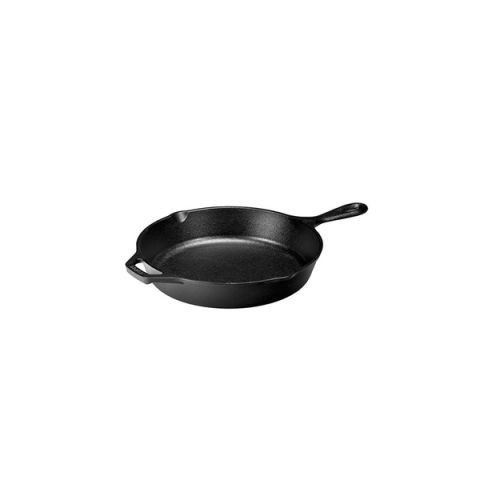
Lodge has been casting iron in South Pittsburg, Tennessee since 1896. Their 10.25-inch skillet costs around €35 and comes pre-seasoned. The factory seasoning is adequate. It improves noticeably after a few months of cooking. Lodge offers a lifetime guarantee.
Vintage cast iron (Griswold, Wagner, early Lodge) has a machined-smooth cooking surface that modern production does not replicate. Modern Lodge is sand-cast and slightly rougher. The difference is real but overstated: both develop excellent seasoning over time. If you find a well-seasoned vintage piece, buy it. Starting from scratch: new Lodge is the sensible choice.
Size: the 10-inch rule
A 10 to 10.25-inch skillet covers the widest range of tasks. Searing steaks, frying eggs, baking cornbread. Larger pans (12 inch and above) become awkward on most home hobs. An 8-inch is limiting for anything involving more than two portions.
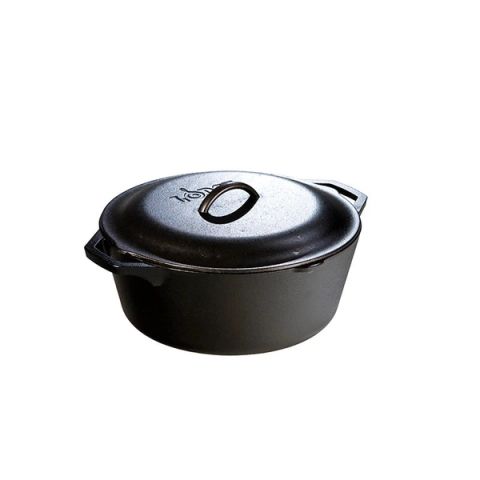
If you are buying one piece, buy the 10.25-inch. If you want a second pan, add a 12-inch for larger batches. A Dutch oven is worth considering if you braise regularly.
Seasoning: the only maintenance that matters
Seasoning is polymerised oil. Heat oil past its smoke point in thin layers on cast iron. It bonds to the metal and forms a polymer coating. That is what gives cast iron its non-stick properties and protects it from rust.
Apply a very thin layer of flaxseed oil or lard to every surface. Wipe off almost all of it. The thinnest possible coat: not a visible film. Bake upside-down at 230°C for one hour. Repeat three to four times. After that, cooking bacon and searing meat builds seasoning on its own.
What actually damages cast iron
"Never use soap" is a myth from the era of lye-based soap. Modern dish soap is fine in moderation. What does cause damage: prolonged soaking in water, cooking highly acidic foods for an extended time, and thermal shock (dropping a very hot pan into cold water).
If your pan rusts, it is not ruined. Scrub the rust off with steel wool. Re-season from scratch. The pan is back. Cast iron can be completely restored from neglect. There is no permanent failure mode.