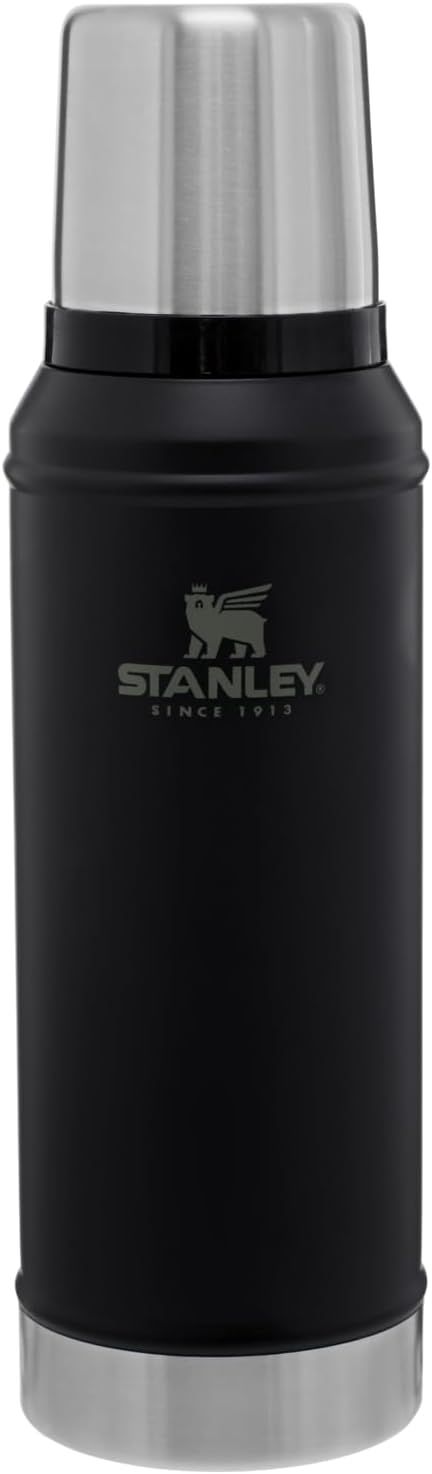
Stanley has made vacuum-insulated flasks for more than 110 years. That is not a marketing line. People send in bottles from the 1970s for warranty service, and Stanley replaces the parts.
The history behind the product
William Stanley Jr. patented the all-steel vacuum bottle in 1913. Steel outside, steel inside, vacuum between them. The insulating principle has not changed. The bottle became standard issue for workers and outdoor people long before drinkware was a lifestyle category.
What sets Stanley apart from other bottles
The best Stanley products use 18/8 stainless steel throughout, no plastic inner wall. That makes them easier to clean and harder to wear out. Replacement parts (lids, gaskets, handles) are sold separately on the Stanley website, which is the clearest sign of a brand that expects its products to outlast their first lid.
The most durable products in the lineup
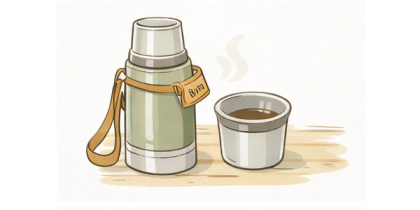
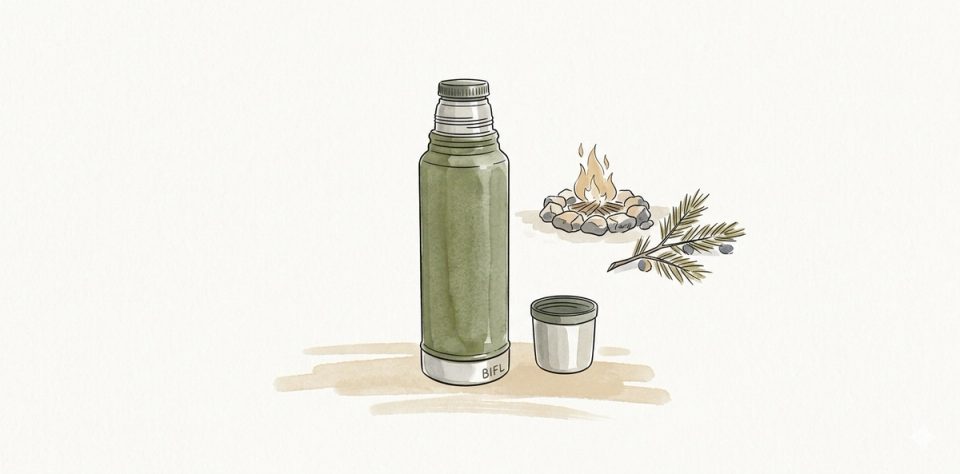
The Classic Legendary Bottle is the one Stanley is built on: green, hammertone finish, lid that doubles as a cup. More recent products like the Quencher went viral in 2020, but the Classic has the longest track record. If longevity is the goal, start there.
How the lifetime warranty works in practice
Stanley offers a lifetime warranty against manufacturing defects. On Reddit, users consistently report that customer service ships replacement lids and parts without questions. Some have received service on bottles from the 1970s. It is not a lifetime warranty that requires a receipt and a lawyer.
Where Stanley falls short
Stanley was sold to PMI (Pacific Market International) in 2002. Quality across the lineup is uneven. The cheaper Classic variants perform worse than the Adventure series. Avoid plastic-bodied Stanley products and check for 18/8 stainless steel on the spec sheet before buying.