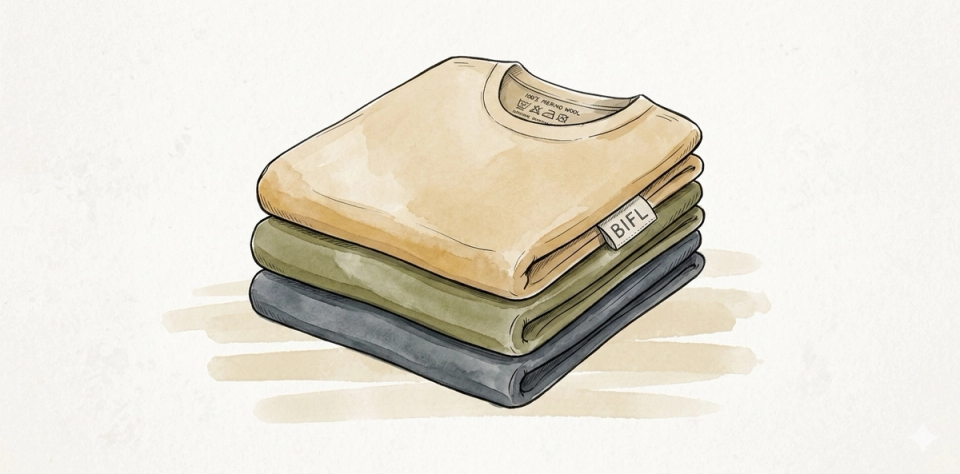
Merino wool is sold in weights - 150, 200, and 260 gsm - but most labels never explain what that means or which one you need. This guide breaks down the differences, tells you when to use each weight, and helps you build a layering system that lasts for years.
What gsm means
GSM stands for grams per square metre - it measures how much wool fibre is woven into the fabric. Higher gsm means more fibre, which means more warmth and more durability, but also more weight.
- 150 gsm - lightweight, best for warm conditions or as a hot-weather base layer
- 200 gsm - midweight, the most versatile option, works in most conditions
- 260 gsm - heavyweight, best for cold conditions or as a standalone top layer
Most people who wear merino regularly own at least a 150 and a 200. A 260 is useful for cold climates or anyone who runs cold.
150 gsm - lightweight
The 150-weight is the summer merino. It is thin enough to feel like a regular T-shirt, breathes well in heat, and dries fast. It is not particularly warm on its own.
Best uses for 150 gsm
- Hot-weather hiking and travel - packs small, odour-resistant for multi-day trips
- Hot climates where you still want the comfort of merino
- As a base layer under a shell in mild conditions
- Everyday wear for people who run warm
Durability note
150-weight is the most delicate weight. The fabric is thin and more prone to pilling and wear. It is not the right choice if you need a hard-wearing work shirt.
200 gsm - midweight
The 200-weight is the everyday merino. It is the most versatile weight in the range and the right starting point if you are buying your first merino piece.
Best uses for 200 gsm
- Three-season hiking - cool mornings, warm afternoons, cold evenings
- Travel and city use - one shirt for multiple climates
- Everyday casual wear in temperate climates
- As a base layer in cold conditions under a mid-layer
Durability note
The 200-weight balances warmth, weight, and durability well. It is thick enough to resist pilling better than 150-weight while remaining lightweight enough for most activities.
260 gsm - heavyweight
The 260-weight is the cold-weather merino. It is warm enough to wear as a standalone layer in cold weather and durable enough for hard use.
Best uses for 260 gsm
- Cold-weather hiking and winter camping
- As a standalone top in cold office environments
- Under a shell in genuinely cold conditions
- Anyone who runs cold at 200 gsm
Durability note
The 260-weight is the most durable of the three. The extra fibre makes it more resistant to abrasion and wear. It is the right choice if you need a merino piece that survives hard outdoor use.
Micron count - fine vs. coarse merino
GSM is not the only factor. Micron count measures the diameter of the individual wool fibres - lower microns mean finer, softer wool that is less itchy against the skin.
- Under 17.5 microns - superfine, exceptionally soft, more expensive
- 17.5–19 microns - fine merino, soft enough for direct skin contact
- 19–21 microns - standard merino, some people find it slightly itchy
- Over 21 microns - coarser, more durable, not suitable for sensitive skin
Most quality merino clothing brands use 17.5–19 micron wool. If you have sensitive skin, look for brands that list their micron count - Icebreaker, Smartwool, and Isobaa all do.
How to care for merino
Merino does not need washing after every wear. Its natural properties resist odour for several days of use, and over-washing shortens the life of the garment.
- Wash every 3–7 wears, or when visibly dirty or smelly
- Machine wash cold on a gentle or wool cycle
- Use a wool-safe detergent - no fabric softener
- Lay flat to dry - never hang wet merino, it will stretch
- Never tumble dry - heat shrinks merino permanently