Why most belts fail within two years
The average belt sold on the high street is bonded leather. Shredded leather fibre, compressed and glued onto a backing, coated with polyurethane to simulate a grain. It looks fine in the shop. Within two years it cracks, peels, and separates. That is not a defect. That is what it was built to do.
Full-grain leather is the outermost layer of the hide, grain intact. It is the densest, strongest part of the animal. It does not peel because it is not a composite. It develops a patina with wear. The same belt at 20 years looks better than it did at two. That is the BIFL case.
Full-grain, top-grain, bonded
Full-grain: the entire grain surface is intact. Natural imperfections are visible. Water and dirt sit on the surface; natural oils in the leather resist penetration. It gets better with use.
Top-grain: the outermost layer is sanded to remove imperfections, then re-embossed with a uniform pattern. Thinner and more uniform than full-grain. The sanding removes the tightest fibres that give leather its durability. Fine for handbags; not enough for a belt expected to last decades.
Bonded leather: not leather in any real sense. Buy something else.
Vegetable-tanned or chrome-tanned
Vegetable tanning uses natural tannins from bark and plant matter. The process takes weeks. The result is a firm, dense leather that moulds to the wearer over time, develops a deep patina, and responds to conditioning. Correct choice for a BIFL belt.
Chrome tanning takes hours, using chromium salts. The result is softer and more consistent. Works well for garments and upholstery. Does not develop character. Does not respond to conditioning the same way. Most commercial leather goods are chrome-tanned. Most heirloom pieces are not.
The buckle
The buckle fails in two ways. Plating wears off on cheap buckles, exposing base metal that oxidises and stains fabric. Or the stitching and rivets attaching buckle to strap give way under tension. A BIFL belt uses a solid brass or nickel silver buckle with no plating, attached with saddle stitching or heavy copper rivets.
A replaceable buckle is worth paying for. Tanner Goods and Orox sell their belts with the buckle attached by a snap rather than stitching. If the buckle wears, you replace it without replacing the strap.
Two belts worth buying
Tanner Goods Standard Belt
Made in Portland, Oregon. Full-grain vegetable-tanned leather, solid brass hardware. 38mm wide, 4 to 5mm thick, natural tan or black. The buckle is replaceable. Tanner Goods offers lifetime repair. At €80–95, with basic conditioning, it will run 25+ years.
Filson Bridle Belt
Filson uses the same heavyweight bridle leather as their bags. Thick, firm, and nearly impossible to wear out. The solid brass roller buckle is simple and will not fail. Works equally well with jeans and chinos. At €90–110 it is at the top of this price range. Filson has made goods in Seattle since 1897 and backs their leather with a lifetime guarantee.
Conditioning
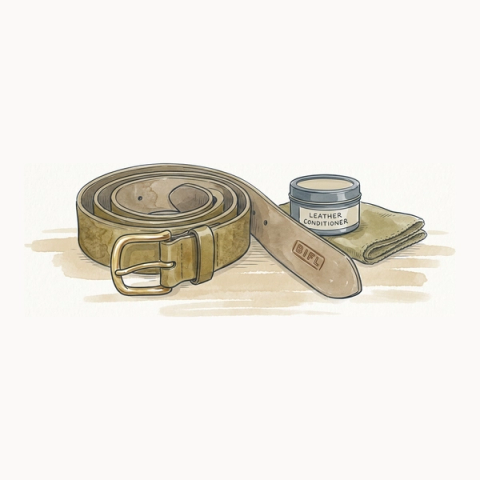
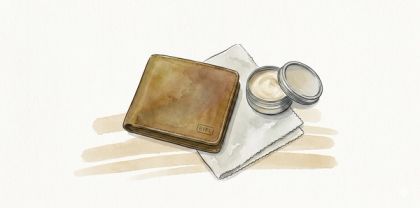
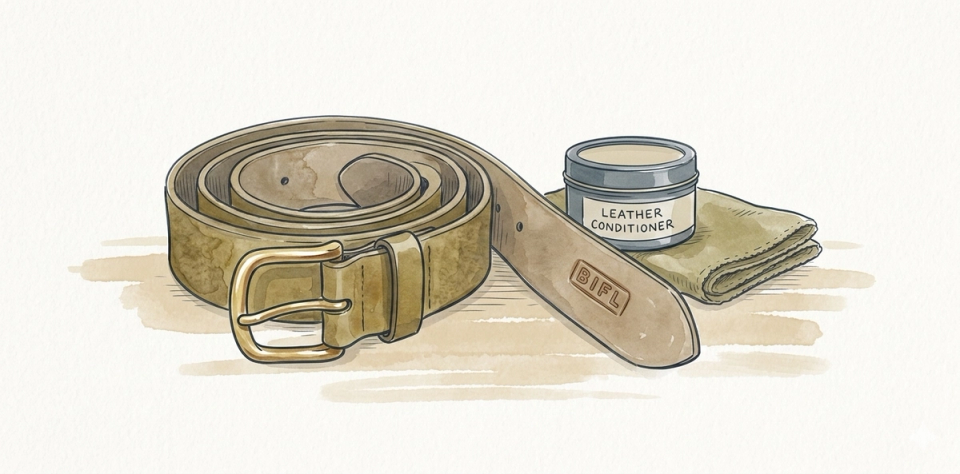
A vegetable-tanned belt needs conditioning once or twice a year. Leather Honey, Obenauf's Heavy Duty LP, or plain neatsfoot oil: applied thinly with a cloth, worked in, left 30 minutes, then buffed. Five minutes of work. Extends the belt by years per treatment.
Skip silicone-based conditioners and spray protectors. They seal the pores. The belt looks fine for a year, then deteriorates. Oil-based conditioners only.