Carbon steel vs cast iron
Cast iron is thick and heavy, which means it holds heat well but takes a long time to come to temperature. Carbon steel is thinner - typically 2-3mm - so it heats up and responds to temperature changes much faster. A carbon steel pan goes from cold to searing-hot in about 90 seconds on a gas hob. The trade-off is less heat retention: carbon steel will drop in temperature more when cold food hits the surface. For most cooking tasks - sautéing, searing, omelettes - the faster response time is an advantage, not a drawback.
Professional kitchen standard
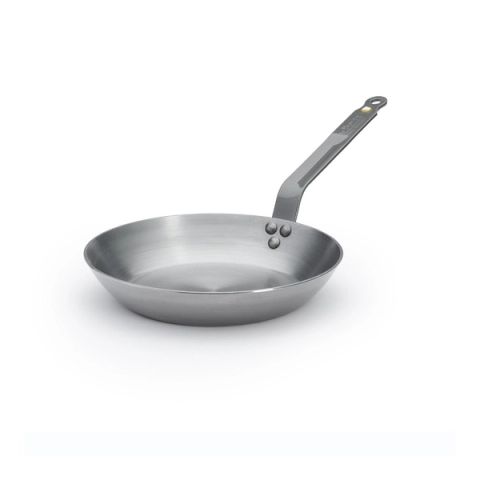
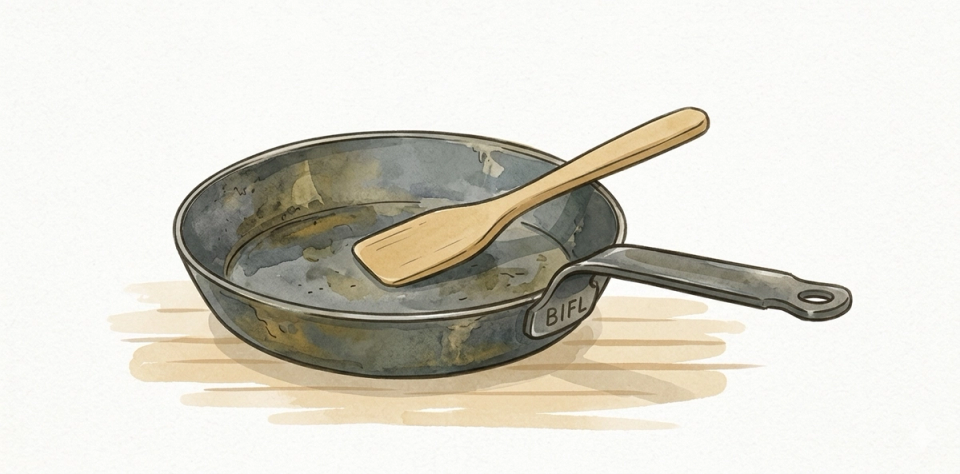
De Buyer has been making carbon steel pans in Val d'Ajol, France since 1830. The Mineral B line is what you find in professional French kitchens: bistros, brasseries, cooking schools. The beeswax coating that comes on new pans is a rust protector for storage, not a seasoning - you need to remove it before first use by heating the pan with a thin layer of oil until it smokes, wiping out, and repeating 2-3 times. After that initial seasoning, it behaves like cast iron: season builds up with each use.
Better than non-stick for most uses
A non-stick pan has a surface that degrades over time. Scratches, overheating, and normal wear reduce its non-stick performance, and at some point the coating itself becomes a concern. A well-seasoned carbon steel pan has non-stick properties that only improve over time, with no coating to degrade. It handles high heat that would destroy a non-stick, it can go in the oven, and it will still be performing perfectly in 20 years. The learning curve - building and maintaining the seasoning - is steeper than non-stick, but not complicated once you understand the principles.
The wok variant
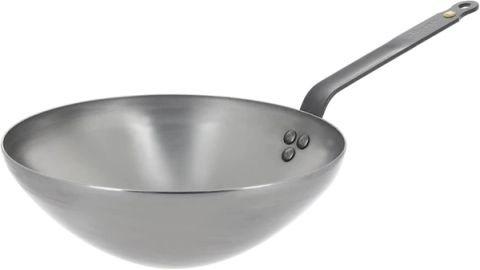
De Buyer also makes the Mineral B in a wok shape. Carbon steel is the traditional material for woks, and for the same reasons it is ideal for pans: it heats fast, handles very high heat, and seasons over time. A carbon steel wok seasoned properly will not stick, will not corrode, and will last indefinitely with basic care.