What makes the AeroPress different
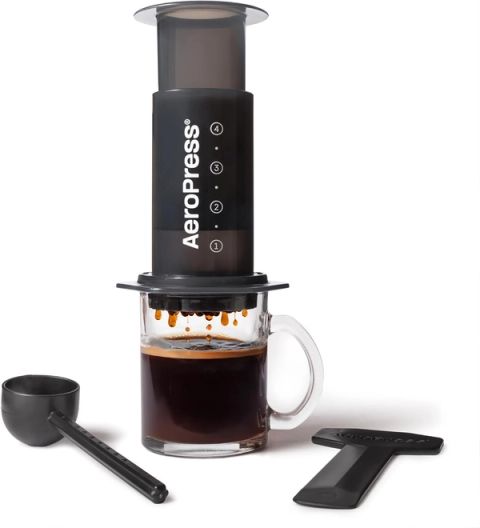
Most coffee makers have a significant number of components - heating elements, pumps, tubes, valves - each with its own lifespan. The AeroPress has three things: a cylindrical chamber, a plunger with a rubber seal, and a cap with a filter. That is it. Nothing to leak, nothing to break. The only wear item is the rubber seal; replacing it costs €8 and takes thirty seconds.
The coffee
The AeroPress works by full immersion and air pressure. You add ground coffee, pour in hot water (ideal: 80 to 90°C, not boiling), stir briefly, and press the plunger slowly through. The water pulls through the grounds in 60 to 90 seconds. That is shorter than a French press and lower pressure than an espresso machine - the result is a full-bodied, clear coffee without bitterness. With a finer grind and more pressure, you get close to espresso.
Travel
The AeroPress weighs 230 grams and fits in any bag. There is a travel version - the AeroPress Go - that packs even smaller. All you need is hot water; a hotel kettle does the job. For travellers who consider decent coffee non-negotiable, there is nothing lighter or more durable.
What it does not do
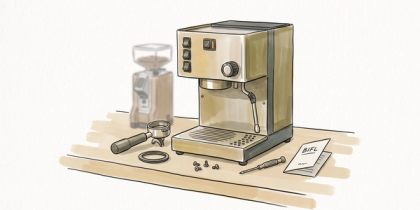
The AeroPress does not make espresso in the classical sense - that requires 9 bar of pressure. It produces something close, but a good espresso machine gives a different result. For pour-over purists: it does not filter as precisely as a Hario V60 or Chemex. It is a versatile tool, not a specialist one.
The only part that wears out is the rubber seal on the plunger, and AeroPress sells it separately for a few dollars. No tools needed, it just presses into place.