How it works
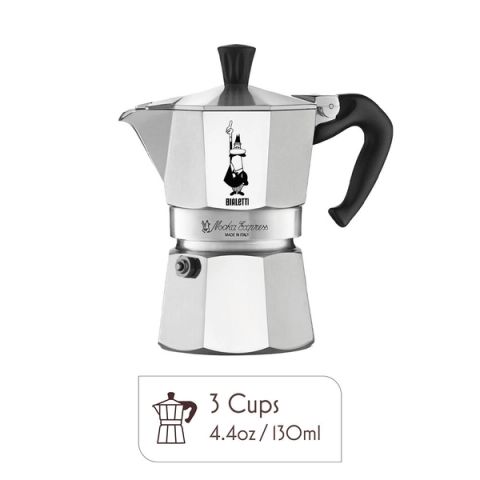
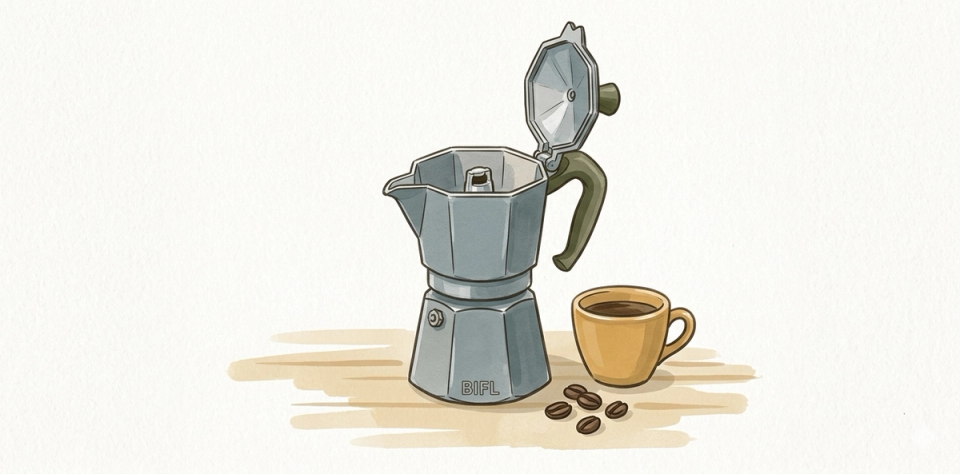
Fill the bottom chamber with cold water up to the safety valve. Pack the metal filter basket with ground coffee - medium-fine grind, no need to tamp. Screw on the top. Heat on the hob over medium heat. Water heats, pressure builds, and steam pushes the water up through the coffee grounds and into the top chamber. When you hear a gurgling sound, the coffee is ready. The whole process takes 3-4 minutes. Turn off the heat when the gurgling starts - letting it run dry scorches the coffee.
Aluminium vs stainless: the Venus
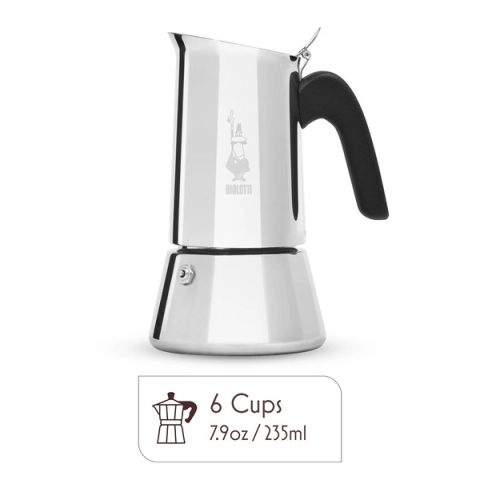
The classic Moka Express is aluminium, which is why it feels light in the hand and heats quickly. Aluminium is reactive to acidic foods, but coffee brewed quickly at low temperatures does not cause any meaningful leaching in practice. If you prefer stainless, the Bialetti Venus is the stainless steel version of the same design. The Venus is heavier, works on induction (the aluminium Moka Express does not), and is slightly easier to clean. The coffee tastes the same.
Maintenance and replacement parts
The rubber gasket in the lid wears out and hardens over time. Bialetti sells replacement gaskets for under €5, and they are the correct size for each pot size (3-cup, 6-cup, etc.). Replacing the gasket every year or two keeps the seal tight and the pot brewing correctly. The filter plate is also replaceable. If the exterior of an aluminium pot gets dull, do not clean it with abrasive scrubbers - it will scratch. A soft cloth is enough.
Why people love it
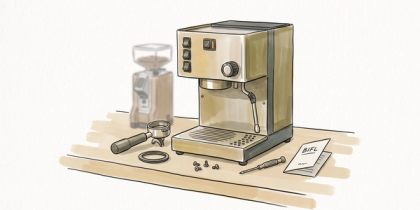
Espresso machines cost €500-2000 and require descaling, filter replacements, and regular maintenance. The Moka Pot costs €25-35, lasts decades, and the only thing that wears out is a €5 rubber ring. It is not true espresso - the pressure is lower than a machine can produce, so the crema is thin - but the coffee is strong, aromatic, and genuinely satisfying. A lot of people who own expensive espresso machines also own a Moka Pot for mornings when they want coffee fast and without fuss.