Why the design has not changed
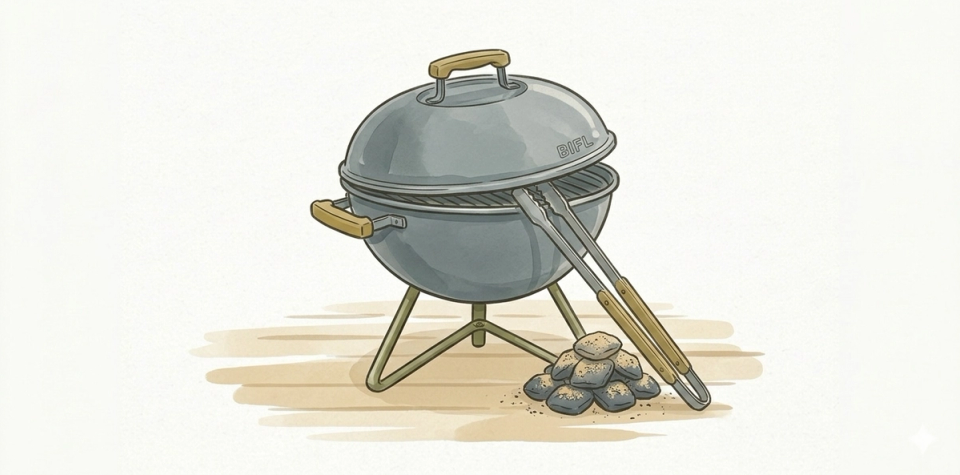
The Weber Original Kettle is two porcelain-enameled halves, two vents, and a grate. That is it. No electronics, no gas lines, no digital thermometer that needs firmware updates. Porcelain enamel does not rust or crack under normal use. The Weber someone bought in 1985 still works, and replacement parts cost a fraction of the original price.
The 57cm is the standard for good reason
Weber makes the Kettle in three sizes: 47, 57, and 67cm. The 47cm runs out of room the moment you want to feed more than two people or cook something indirectly. The 67cm is for caterers. The 57cm fits a whole chicken, a 1.5kg ribeye, or eight bratwursts at once, with enough space for a two-zone setup — coals on one side, nothing on the other — so you can combine direct and indirect heat.
Maintenance that barely exists
After cooking: brush the grate, empty the ash through the catcher underneath. Twice a year, check the inside for buildup. That is the full routine. The cast iron grate — the part that wears most — costs around €35 and is always in stock. Weber sells replacement parts for models that are twenty years old.
What it is not
The Kettle is not a smoker. You can use the snake method — briquettes in a half-circle with wood chips on top — to get four to six hours at low temperature. But for real low-and-slow pulled pork, the Weber Smokey Mountain or an offset smoker is the honest choice. That is not a flaw; it is just what this thing is and is not.