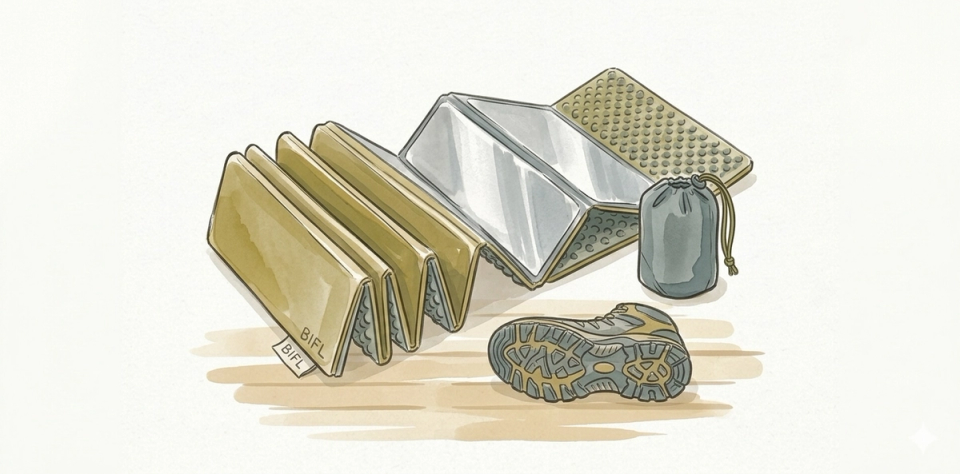
Closed-cell versus inflatable
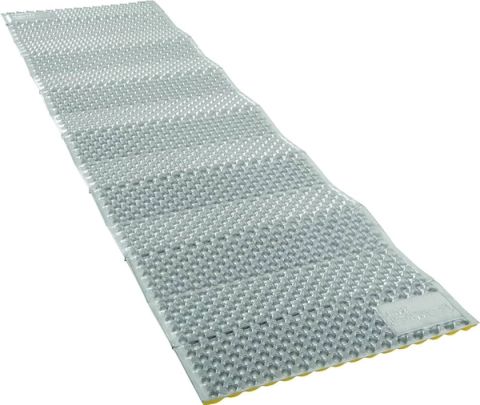
Inflatable sleeping pads are more comfortable than closed-cell foam. That is straightforward. But an inflatable pad has a membrane that can puncture on a sharp stone or thorn. Spending the middle night of a multi-day trip on the ground without insulation is genuinely miserable. The Z-Lite Sol is solid foam - there is nothing inside that can fail. You can put it on rock, in brambles, or on frozen ground. Nothing leaks.
What R-value means
R-value measures thermal resistance. The Z-Lite Sol has an R-value of 2.0 at standard thickness. That is adequate for three-season camping down to roughly -5°C. Below that you need an R-value of 4 or higher, meaning a thicker pad or layering with a second insulating mat. Many mountaineers combine the Z-Lite Sol with a thin inflatable for the best of both approaches.
Weight and packed size
410 grams for a pad that is 183cm long and 51cm wide. That is light for what it does. It folds accordion-style to 51 x 14 x 14cm - too bulky for inside a pack, but it straps easily to the outside. Some hikers attach it to the bottom; others cut it in half for ultralight use.
Twenty years largely unchanged
Thermarest has made minor updates over the years - the Sol version adds a reflective aluminium layer on one side that reflects radiant heat back toward you. The core foam is the same, from the same company, for more than two decades. That says something about the robustness of the design.