Pull saws versus push saws
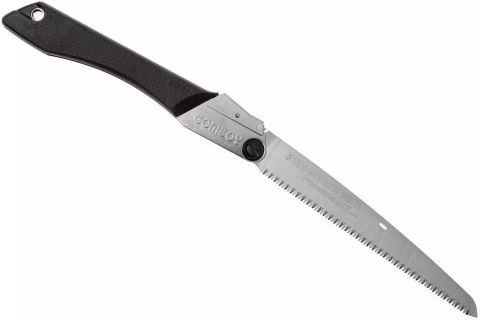
Western handsaws cut on the push stroke. That sounds normal, but there is a problem: pushing causes the blade to flex slightly, which reduces accuracy. Japanese saws cut on the pull stroke - the blade is under tension, does not flex, and cuts more precisely with less effort. The result: the Silky Gomboy cuts through a 5cm branch in four to five strokes. A comparable Western camp saw takes two to three times as long.
The 210mm is the most versatile length
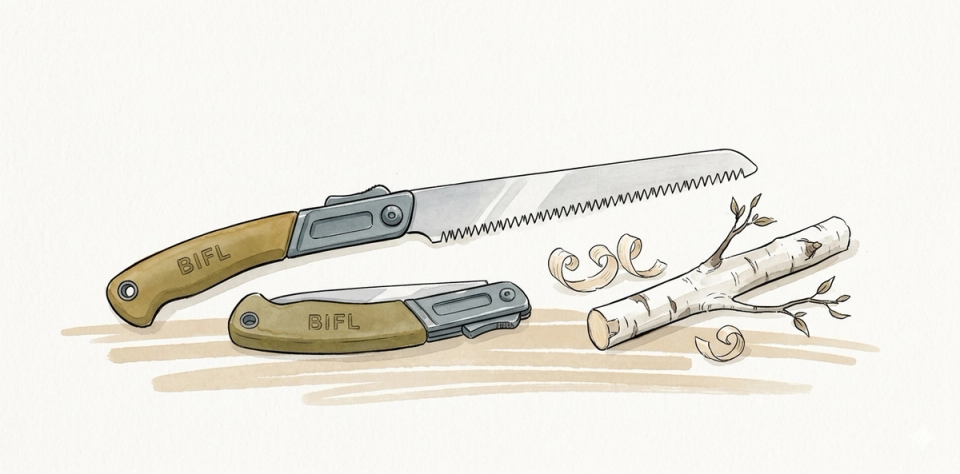
Silky makes the Gomboy in three lengths: 170, 210, and 240mm. The 210mm is the compromise between compact folding and effective cutting capacity. It fits in a trouser pocket, weighs 170 grams folded, and handles branches up to 15cm in diameter without strain. For thicker material - logs above 20cm - the Bigboy or a chainsaw is the better tool.
The blade: replaceable after years
The Silky blade is made of impulse-hardened steel. The teeth are filed in three dimensions - three angles per tooth instead of one - which increases cutting efficiency. After years of use, the teeth dull; replacement blades cost around €20. You keep the handle and locking mechanism, which never wear out.
Who uses it
Arborists, foresters, and mountain rescue teams use Silky as standard. That is the best reference. For campers who want to process firewood: the Gomboy is faster than an axe on small to medium branches and safer to carry in a pack. For home owners who occasionally prune a tree: it is more pleasant to use than any garden saw from a hardware chain.