Hand-forged, not as a gimmick
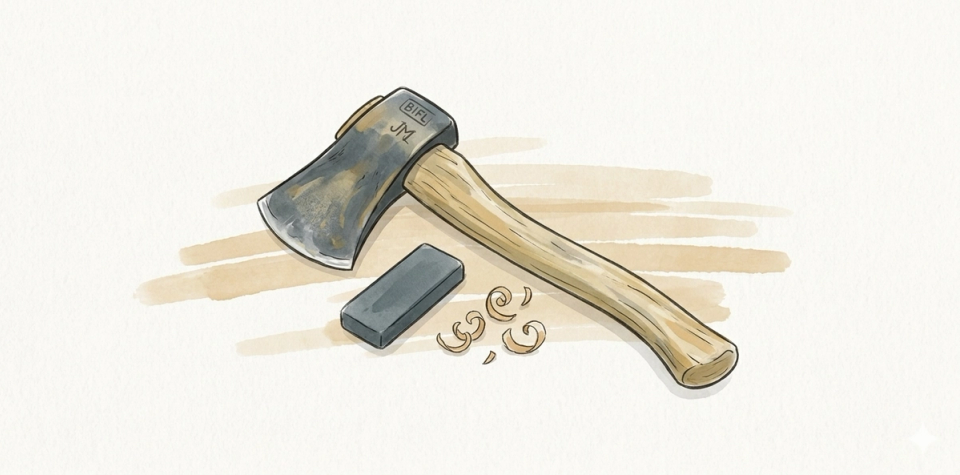
Most axes are pressed or cast. Gransfors Bruk hand-forges every axe at their smithy in Hälsingland, Sweden. This is not just branding — there is a practical difference. Forging compresses and elongates the steel, improving grain structure and making the head tough rather than brittle. Each axe carries the smith's initials as a form of personal quality control.
The Small Forest Axe: who it is for
The Small Forest Axe has a 600-gram head and a 50cm hickory handle. Too heavy to use comfortably one-handed for extended periods, light enough to carry all day. It is designed for thinning young trees, processing kindling and branches, and splitting medium-sized rounds. Not the right tool for logs above 30cm across — for that, look at the Splitting Maul. Most campers and woodland managers land squarely in Small Forest Axe territory.
Maintenance: less than you would expect
Swedish steel needs a light coat of oil on the head after heavy use and a dry storage spot. Sharpening is done with the round whetstone Gransfors includes with every axe. The hickory handle can be replaced if it splits — replacement handles are standard stock. A well-maintained twenty-year-old Small Forest Axe is a better tool than a new cheap one.
The price
The Small Forest Axe costs around €120 to €140. A Fiskars X7 costs €40 and also works. The difference is not in functionality for occasional use — it is in repairability, steel quality, and longevity. If you use the axe several times a month, the Gransfors is cheaper over ten years.