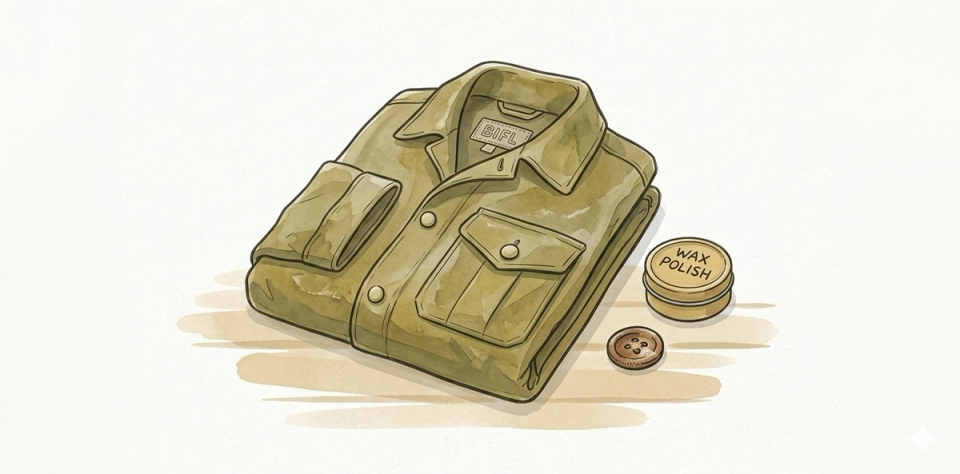
Oiled canvas: how it works
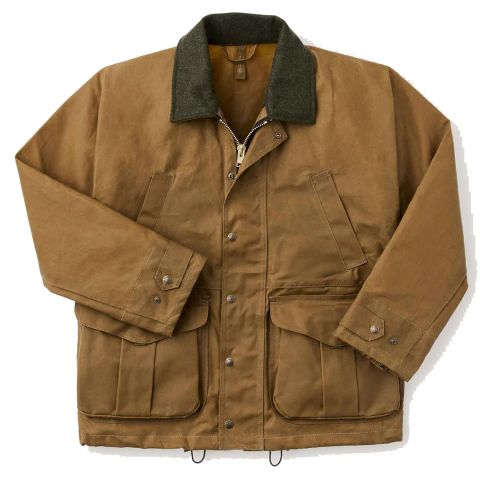
Tin cloth is heavy cotton canvas saturated with an oil-wax formulation. The material is inherently water-resistant without a chemical coating that wears off. When the water repellency diminishes after years of use, you wash the jacket, let it dry, and reapply a coat of Filson Oil Finish Wax with a sponge. That takes 20 minutes and gives the jacket a new lease of life. No coating peels or washes away; the material itself is the protection.
What it protects against
Oiled canvas keeps out light to moderate rain. In sustained downpours, the material gets heavier but stays drier longer than untreated canvas or most synthetics. It blocks wind - there is no waterproof membrane to allow water vapour through, but the density of the weave blocks wind effectively. For hunting, fishing, woodland management, and serious walking, it is an honest working material.
The patina
A new Filson tin cloth jacket is stiff. After three months of use, it begins to crease at the points where you flex. After a year, it has an individual pattern of wear and folds that makes every jacket unique. This is a jacket that improves with age - not in the sense of "it looks nice", but in the sense that it fits, moves, and feels exactly the way you move.
The price and the alternative
The Filson Tin Cloth Field Coat costs around €400 to €500. That is a lot. The Barbour Bedale - a comparable oiled-canvas jacket from the UK - costs around €280 and is equally re-waxable. Barbour has a repair service and is readily available in Europe. For a European buyer, Barbour is the more pragmatic choice; the Filson is for those who want the original.