The problem with cheap toasters
A €25 toaster works fine - until the heating element burns out after three years or the timer jams. At that point, you bin it and buy another one. Dualit built its first toaster in 1946 with a single principle: every part must be replaceable. That has not changed.
How the Dualit works
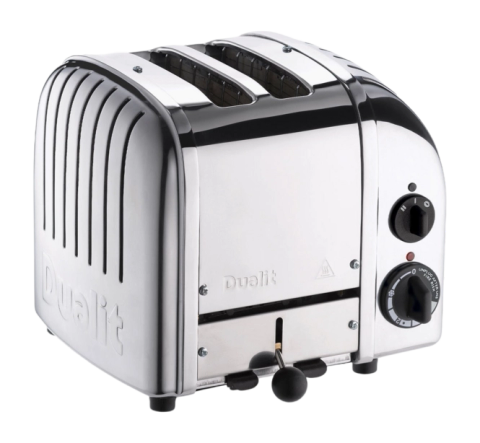
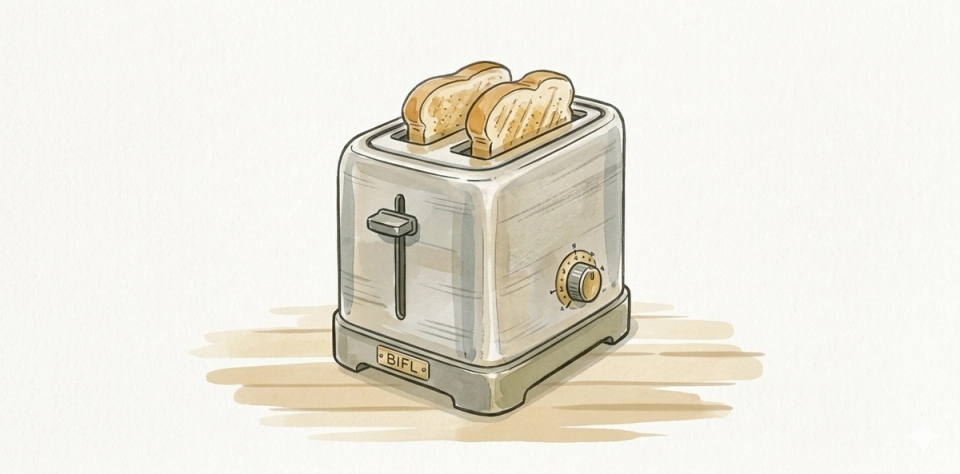
The Dualit 2-Slice does not have automatic ejection. You decide when the toast is done using the timer dial on the side, then push the lever down to release the bread. This sounds less convenient, but the mechanical timer is simpler than any electronic system and will never fail in a way that cannot be fixed. The heating elements are sold separately and can be swapped with a screwdriver.
What actually lasts
The casing is brushed stainless steel. The handles are Bakelite - a material that develops a patina over the years but never warps or cracks. The mechanism is entirely mechanical, no circuit board. Dualit still sells parts for toasters made in the 1990s. That tells you something about the design intent.
Who the Dualit is not for
The Dualit costs around €120 to €160. For that money you can buy six €25 toasters. If you make toast once a week and treat most kitchen gear as disposable, the Dualit makes no sense. But if you make toast every day and want the same machine in twenty years, it is the cheapest option in the long run.
Dualit explicitly designs the Classic toaster to be repaired, not replaced. Heating elements slide out and are sold individually per slot, and the company still sells parts for toasters made before 2000.