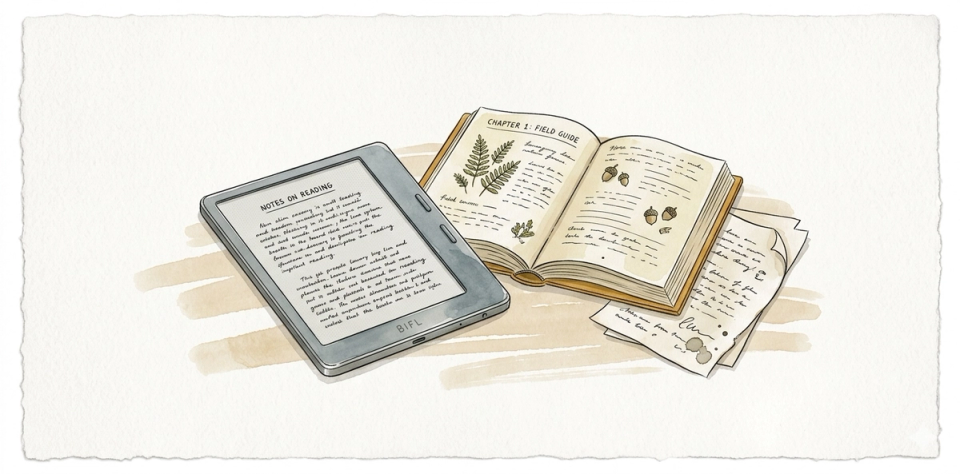
Amazon recently confirmed that it is ending support for a range of older Kindle models. Specifically, devices from the seventh generation and earlier, including first through third generation Paperwhites and the original Kindle Voyage, will lose access to the Kindle Store and cloud sync. The hardware still works. The books you already downloaded stay on the device. But the moment that support ends, you cannot buy new books, download past purchases, or sync your reading position.
For most Kindle owners, the reaction is: that is unfortunate. For anyone thinking about e-readers through a BIFL lens, it should be a wake-up call.
The core problem with Kindle
Kindle hardware is genuinely good. The e-ink screens on Paperwhite models are excellent. Battery life is measured in weeks. The devices are light, durable, and well-designed.
The problem is not the hardware. It is the model.
When you buy a Kindle, you are not buying books. You are buying licences to read books within Amazon's ecosystem. Those books are tied to your Amazon account, stored in Amazon's format, and only accessible through Amazon's software. The moment Amazon decides a device is no longer worth supporting, that device becomes a dead end. Your library does not move with you automatically.
This is planned obsolescence with extra steps. The device is not broken. Amazon just decided it is done.
What this looks like over eleven years
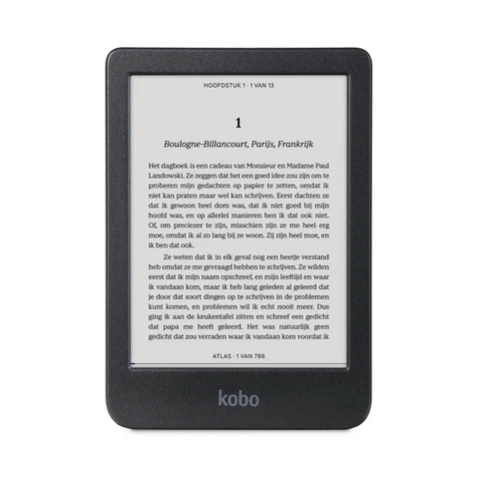
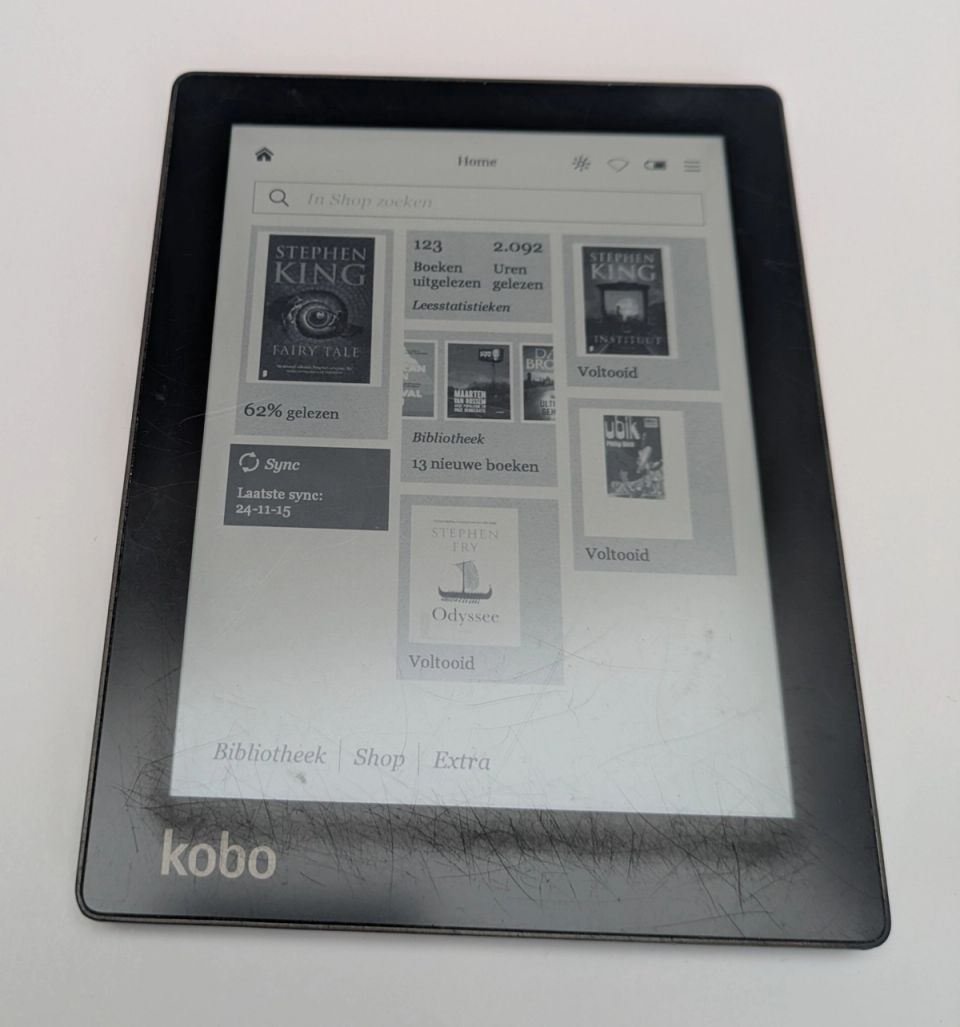
In our household, a Kobo Aura purchased in 2015 and a Kobo Clara HD purchased in 2018 are still in daily use. On my Kobo Aura 123 books have been finished and 2,092 hours spent reading.
A few things worth noting from eleven years of real use:
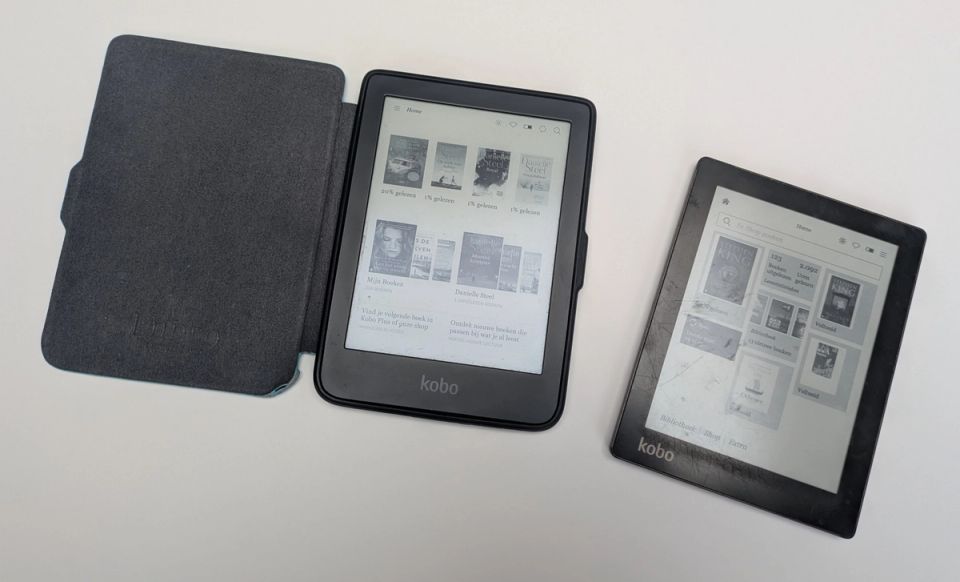
- The screen on the Aura has accumulated light surface scratches over the years. You cannot see them while reading. The e-ink display is matte, so scratches do not catch light the way a glass phone screen would. The Clara HD lives in a magnetic case and has a slightly raised bezel, so it is still completely scratch-free.
- The battery on the Clara HD lasts well over a month at roughly one hour of reading per day. This is not marketing copy. It is what the device actually does.
- The lowest brightness setting is genuinely low. Low enough to read in a dark room without disturbing sleep. The warm light option makes it comfortable for late-night reading in a way that a phone or tablet screen is not.
- Both devices are perfectly readable in direct sunlight. E-ink does not wash out in bright light the way LCD screens do.
- Loading books works exactly like a USB drive. Plug it in, drag the file to the device, done. No account, no app, no cloud required.
Why Kobo is the better long-term choice
Kobo devices natively support EPUB, the open standard for e-books. EPUB files are not tied to any store or platform. You can buy from any retailer, load the file directly onto the device, and it stays yours permanently. You can also borrow library books through Overdrive and Libby integration without any additional hardware.
This matters for longevity. If Kobo stops making devices tomorrow, your EPUB library is still fully accessible on any other device that reads EPUB. That is not true of your Kindle library.
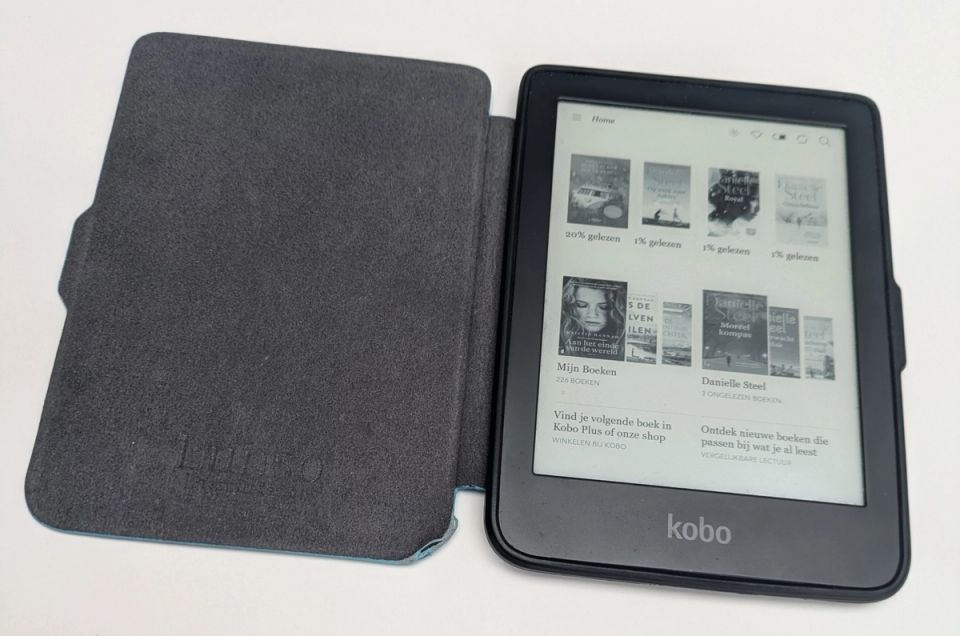
The Kobo Clara BW: the first repairable e-reader
In 2024, Kobo launched the Clara BW in partnership with iFixit. This is significant. iFixit is the repair platform that publishes step-by-step guides and sells genuine spare parts for consumer electronics. The partnership means that replacement screens, batteries, and other components for the Clara BW are officially available, with repair guides written to iFixit standards.
The device is also manufactured with a higher percentage of recycled plastics than previous Kobo models.
For a BIFL buyer, this changes the calculus. A device you can repair yourself, with official parts and guides, is meaningfully more future-proof than one you have to replace when a single component fails.
Calibre: the tool that makes any e-reader more future-proof
Calibre is free, open-source library management software for e-books. It has been actively maintained since 2006.
With Calibre you can convert e-books between formats, manage your entire library on your own computer, and transfer books to any e-reader via USB without relying on any cloud service. A Kobo device plus a Calibre library on your own hard drive is about as close to a BIFL e-reading setup as currently exists.
What about the Kindle Paperwhite?
If you already have a large Kindle library and switching is not practical, the newest Kindle Paperwhite is still a good device. Amazon is not going to cut support on the 12th generation model next year.
But you are still building your library in a closed ecosystem. Every book you buy adds to the switching cost if you ever want to leave. That trade-off is worth being honest about before your next purchase.
The practical recommendation
- Buy a Kobo Clara BW (best value, repairable) or Kobo Libra BW (larger screen, physical buttons).
- Buy e-books in EPUB format from the Kobo Store, or directly from publishers.
- Install Calibre on your computer. Back up your library there.
- Borrow library books through Libby. It is free and works natively on Kobo.
If you have a large Kindle library, use Calibre to convert and back up what you have. Do not leave your library exclusively in Amazon's cloud.
The honest verdict
E-readers are close to BIFL in hardware terms. The screens last. The batteries hold up. A well-made device from 2015 is still perfectly functional in 2026.
Where the category falls short is ecosystem lock-in. The Kindle support cuts are not an accident. They are the predictable outcome of buying into a closed ecosystem with no exit.
The solution is not to avoid e-readers. It is to choose one that lets you own your library, not just license it. The Kobo Clara BW, with its iFixit partnership, goes one step further: it is the first e-reader designed from the ground up to be kept.
New to the BIFL philosophy? Read our guide: What is BIFL?