Why notebook quality matters more than you think
A cheap notebook has two failure modes: the binding breaks and pages fall out, or the paper bleeds and feathers with any ink that is not a ballpoint. Both happen within months of regular use. The notebook becomes an obstacle rather than a tool.
A quality notebook (specifically, one with thread-sewn binding and acid-free paper above 80 gsm) solves both problems permanently. The binding holds for decades. The paper handles fountain pens, gel pens, and brush pens without bleed-through. When you fill it, the notebook becomes an archive, not waste.
Paper weight and surface: the numbers that matter
Paper weight is measured in grams per square metre (gsm). Standard copy paper is 80 gsm. Most quality notebooks use 80–100 gsm. The Leuchtturm1917 uses 80 gsm; the Rhodia Webnotebook uses 90 gsm Clairefontaine paper. Higher gsm means more resistance to ink bleed-through and less show-through on the back of the page. Wet inks perform noticeably better.
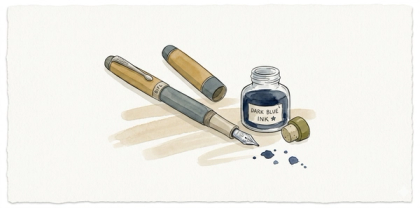
Surface texture also affects writing experience. Smooth paper (like Rhodia's) gives a gliding, effortless feel with fountain pens. Slightly textured paper gives more feedback, which some writers prefer for ballpoints and pencils. Neither is better; it is a preference question. Try both.
Binding: sewn vs glued
Thread-sewn binding is the BIFL standard. Each signature (a folded group of pages) is sewn to the spine, then glued. The pages can be opened flat without stressing the binding, and individual signatures do not detach over time. A thread-sewn notebook opened daily for five years looks the same as on day one.
Perfect-bound notebooks (pages glued directly to a card spine) look clean on a shelf but fail under real use. The glue cracks and pages loosen within a year of regular use. Spiral-bound notebooks are infinitely flat-openable but the spine warps, catches on things, and the notebook cannot be archived without the binding damaging adjacent pages.
Acid-free paper: the archival case
Standard paper is slightly acidic and yellows over decades. Acid-free paper maintains its whiteness and structural integrity for a century or more. If you keep notebooks as records (project notes, journals, sketchbooks) acid-free paper is not a luxury. Leuchtturm1917 and Rhodia both use acid-free paper as standard. This is worth checking for any notebook you intend to keep.
Our picks
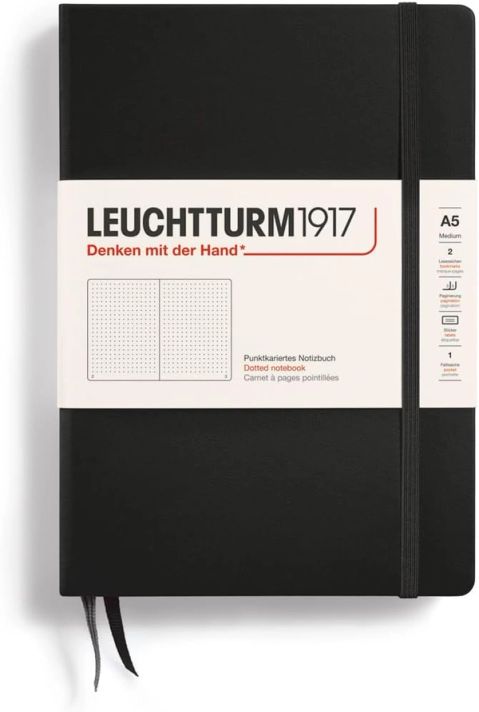
Leuchtturm1917 A5 Hardcover: Best for organisation
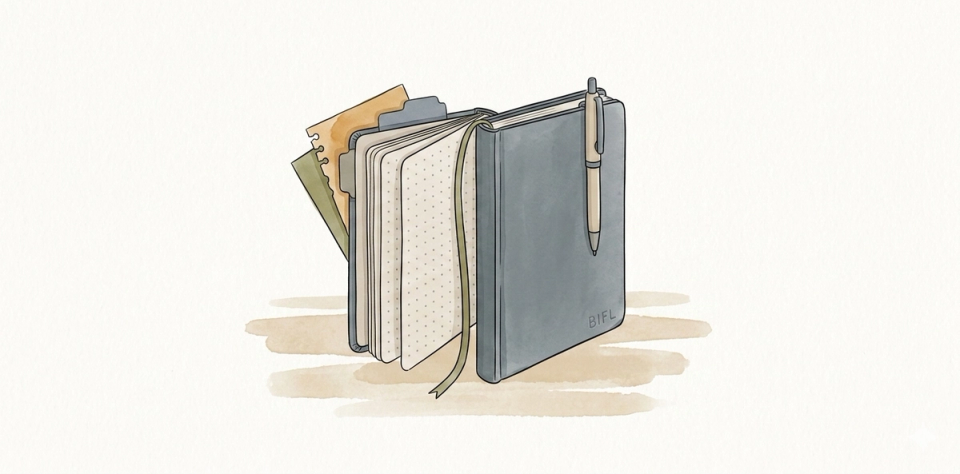
Leuchtturm1917 has been making notebooks in Germany since 1917. The A5 hardcover uses 80 gsm acid-free paper, thread-sewn binding, a ribbon bookmark, an elastic closure, a pen loop on the back cover, and numbered pages with an index. Every page is numbered. The index is pre-printed at the front. For anyone who references old notes, this organisation system is worth the slight premium over a blank notebook. At €20–25 it is the most feature-complete BIFL notebook available.
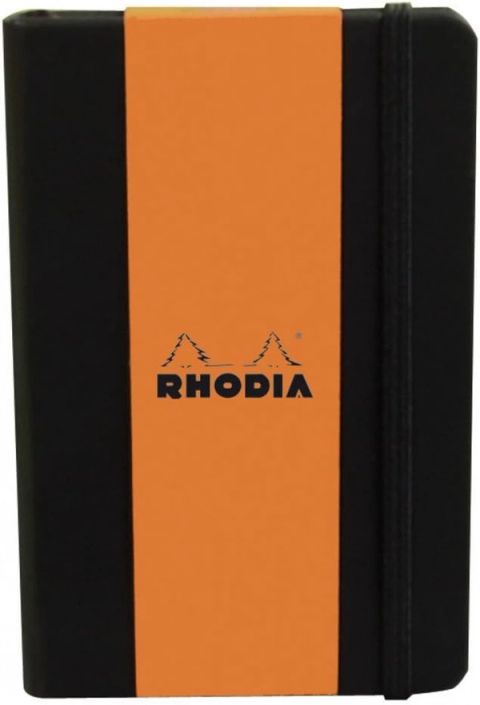
Rhodia Webnotebook A5: Best for writing performance
The Rhodia Webnotebook uses 90 gsm Clairefontaine paper, the smoothest paper in any production notebook at this price. Fountain pens, flex nibs, and brush pens perform noticeably better on this paper than on any other. Thread-sewn binding, hard leatherette cover, ribbon bookmark, elastic closure. At €18–22 it is marginally cheaper than the Leuchtturm with better paper and slightly fewer features. For writers who prioritise the writing experience over organisation, this is the correct choice.
Field Notes: Best for carry and durability
Field Notes are pocket-sized (9 × 14 cm), cover-stapled, and use 60 gsm paper that is not ideal for fountain pens. They are on this list because they fulfil a different BIFL function: a notebook you take everywhere, in every pocket, for years without worrying about it. The covers are durable, the format fits in a shirt pocket, and Field Notes has been making them in Chicago since 2007 with consistent quality.
Care and longevity
A hardcover notebook lives a long life with minimal care. Keep it away from prolonged moisture. A spilled drink on an open notebook is recoverable; a notebook that sits wet overnight is not. The elastic closure keeps the notebook closed and the pages protected in a bag. For long-term storage, a cool, dry, dark environment is sufficient. Thread-sewn notebooks stored correctly last 50+ years without degradation.
New to the BIFL philosophy? Read our guide: What is BIFL?