Most mechanical pencils are designed to be replaced, not repaired. The barrel is plastic, the mechanism is loose, and the grip section gets slippery after a few months of use. You replace the lead, then eventually you replace the pencil.
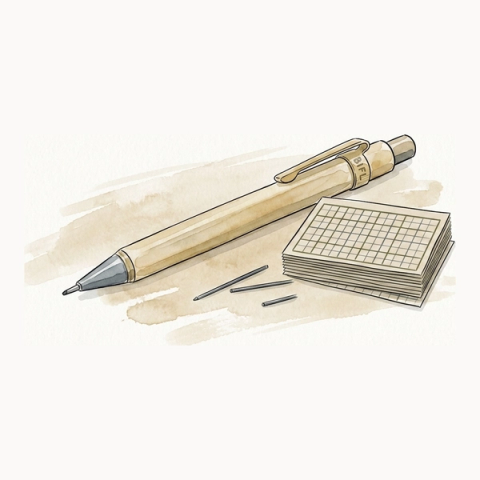
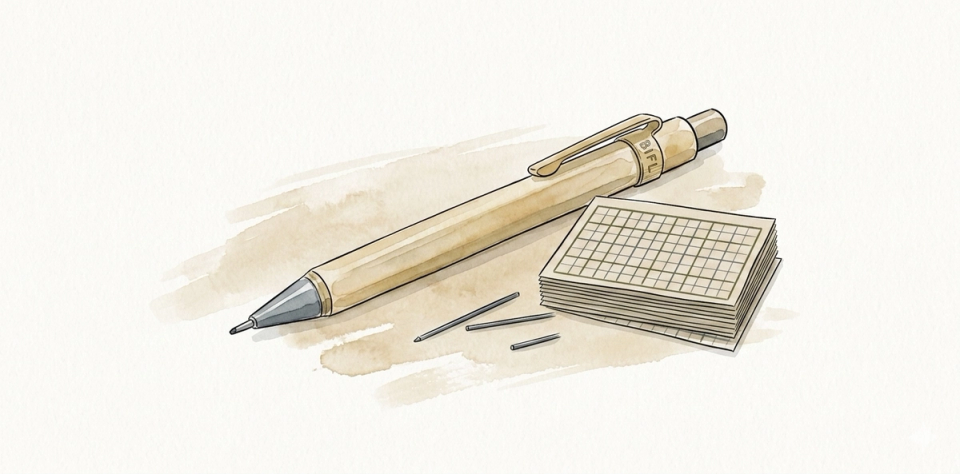
A BIFL mechanical pencil works from the opposite direction. Brass or aluminium body, precision-machined chuck, knurled metal grip. The mechanism tightens with use rather than loosening. You replace the lead and the eraser. The pencil itself is permanent.
Metal body vs. plastic body: why it matters
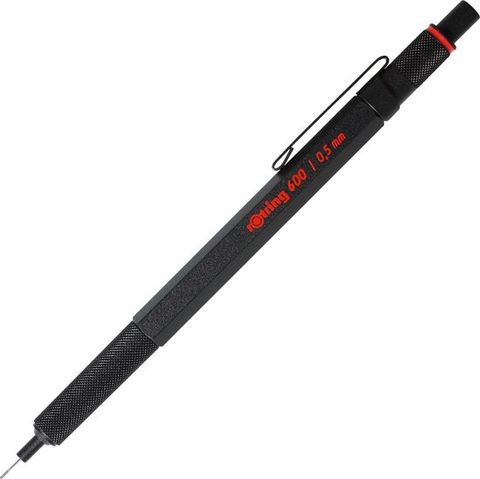
The barrel material determines the life of the pencil. Plastic barrels develop hairline cracks, warp under heat, and feel progressively worse as the surface scratches. A brass barrel (like the one on the Rotring 600) oxidises to a warm patina that actually improves the grip. Aluminium barrels, as used by Caran d'Ache on the 844, are lighter and equally durable.
Weight distribution also changes with metal bodies. A brass pencil sits heavier in the hand, which reduces writing fatigue for long sessions. Engineers and architects often prefer this. Illustrators doing quick gesture work may prefer the lighter aluminium option.
Chuck mechanism vs. clutch: what to look for
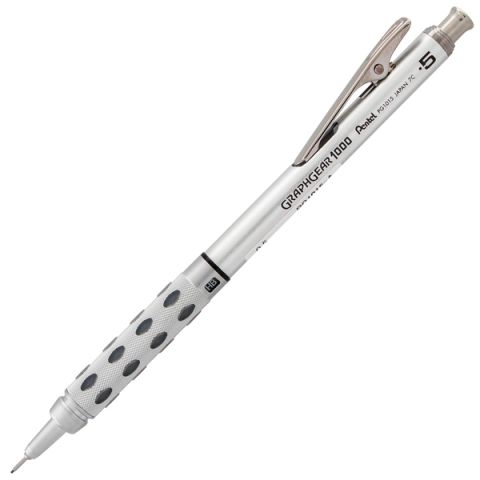
The mechanism that advances the lead is where BIFL pencils separate from disposables. Cheap pencils use a simple tube-and-friction system that lets lead wobble. BIFL pencils use a precision chuck (a collet that closes tightly around the lead, with zero play). The Pentel GraphGear 1000 uses a PK chuck, which became the standard in technical drawing because it holds 0.5 mm lead without any lateral movement.
The Rotring 600 uses a fixed-sleeve design with no rattle mechanism. The tip is fixed and flush: the lead does not retract. This was the standard on technical drawing boards and it means every line starts exactly where you intend it.
0.5 mm vs. 0.7 mm: choosing your lead diameter
0.5 mm is the standard for writing and precision work. It produces clean, consistent lines and is compatible with the widest range of lead grades. 0.7 mm is better for people who write quickly and apply heavy pressure, as it breaks less often. Most BIFL pencils are available in both; the Caran d'Ache 844 and Rotring 600 come in 0.5, 0.7, and sometimes 0.3 mm variants.
Our picks
Rotring 600: Best for precision work
The Rotring 600 has been in continuous production since 1987. Brass barrel, hexagonal cross-section, fixed metal sleeve, precision chuck. At €30–40 it is the go-to for architects, engineers, and anyone who takes writing tools seriously. The brass develops a warm patina over years of use. Replacement leads are standard 0.5 mm, available everywhere.
Caran d'Ache 844: Best for drawing and illustration
The 844 is lighter than the Rotring (aluminium vs. brass), more comfortable for long sketching sessions, and backed by Caran d'Ache's Geneva service programme: they will repair or restore the pencil for life. At €25–35 it is the most affordable route into a truly lifetime pencil.
Pentel GraphGear 1000: Best retractable option
The GraphGear 1000 adds a retractable tip to the BIFL formula, making it safe to carry without a cap. The PK chuck is among the most precise lead-advance mechanisms made. At €15–20 it is the entry point for anyone not yet ready to commit to brass or aluminium.
Lifetime service: the BIFL test
Caran d'Ache offers a lifetime repair and service program from their Geneva atelier. You send the pencil in; they service, replace, or restore it. This is the benchmark. Rotring and Pentel do not have equivalent programs, but both have been making the same models for decades and spare parts remain available. A Rotring 600 from 1995 accepts current-production leads and erasers without modification.
The practical BIFL test is this: can you still buy parts for it in 20 years? For all three, yes.