Automatic versus quartz
A quartz watch runs on a battery that needs replacing every two years, and the electronics inside are cheap to produce but difficult to repair when they fail. An automatic watch has no battery - the movement winds itself through a rotating weight that turns with your wrist. The mechanism is wheels, springs, and balances. A watchmaker can disassemble it, clean it, and regrease it. That service takes a day and costs €50 to €80.
Why the Seiko 5 Sports
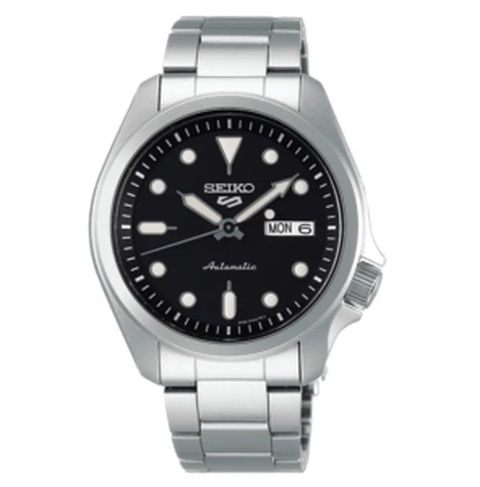
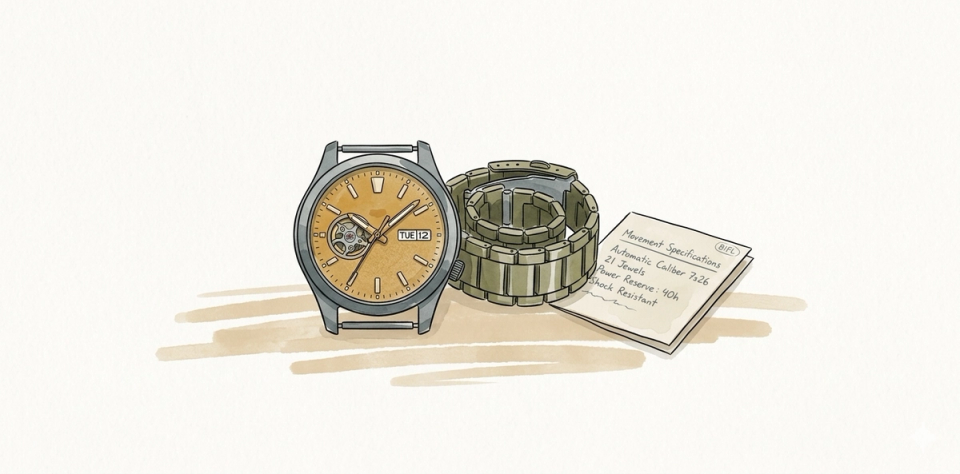
Seiko has been making mechanical movements in Japan since 1881. The 5 Sports line has been running for decades and uses the 4R36 movement: 24 jewels, day and date display, 41-hour power reserve, and manual winding if you go a day without wearing it. It is not a precision movement on the level of a Rolex - expect roughly plus or minus five seconds per day - but it will keep running if you knock your wrist against a car door.
Water resistance and build
The 5 Sports is rated to 100 metres. That is fine for swimming and snorkelling, not for diving. The glass is hardened mineral crystal - not as scratch-resistant as sapphire, but replaceable for €20. The case is stainless steel. The silicone strap that comes standard is functional; most people replace it after a year with something in leather or nylon from a third-party supplier.
The long view
A Seiko 5 Sports can remain serviceable for decades with periodic maintenance. The 4R36 movement is common enough that watchmakers worldwide know it. At roughly €250 to $315 depending on market and seller, the SRPE55 is no longer a sub-€200 watch, but it still offers strong repairability for its price.