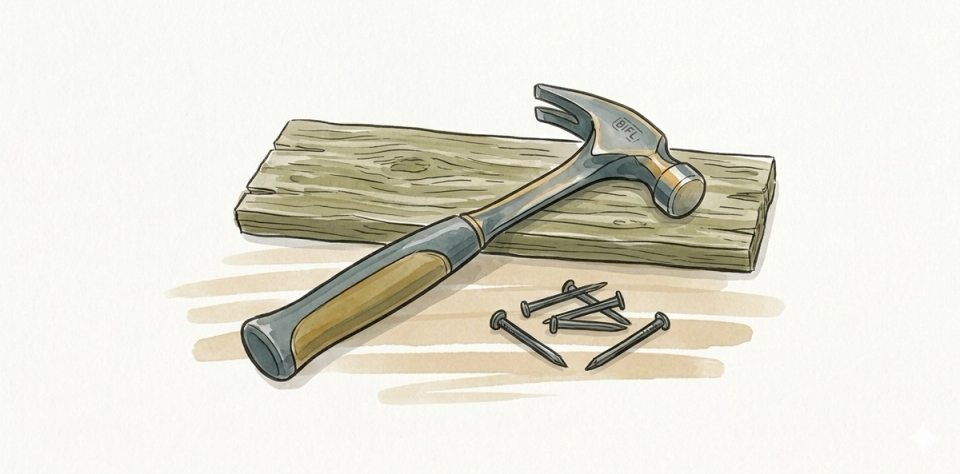
Why hammers break
Most hammers consist of two parts: a metal head and a wooden or plastic handle. That connection is the weak point. After a few years of use, temperature changes and moisture, the handle starts to loosen. You first notice it as a faint rattle. Then comes the moment the head flies off.
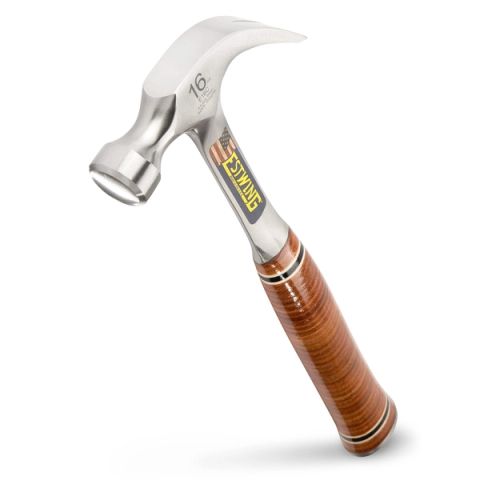
Estwing solved this by forging the hammer from a single piece of steel. Head and handle are one continuous piece. There is no joint that can loosen, no wood that can split, no plastic that turns brittle.
How it is made
The hammers are produced in Rockford, Illinois, where the company was founded in 1923. The production process has barely changed since. Each piece starts as a steel rod that is heated and pressed into shape. The handle gets a leather grip that still feels good after decades of use.
The leather grip is not decorative. Leather absorbs vibration better than rubber or plastic, and it gets more supple with use. Old Estwings with worn leather grips often feel better than new ones.
The E3-16S in practice
The best-selling model is the E3-16S, a 16-ounce curved claw hammer. That weight is the standard on job sites: heavy enough for serious work, light enough to use all day.
The face is hardened and milled with a matte finish that is less likely to slip off a nail. The claw at the back is deep enough to catch even deeply driven nails.